Electric Cargo Tricycle Buyer's Guide: Load Capacity, Range & Wholesale Pricing
The electric cargo tricycle is the workhorse of emerging-market logistics. From market vendors and farmers to courier fleets and construction crews, millions of small businesses move goods on three wheels -- and they are
Last reviewed on May 30, 2026
Quick Take
The electric cargo tricycle is the workhorse of emerging-market logistics. From market vendors and farmers to courier fleets and construction crews, millions of small businesses move goods on three wheels -- and they are
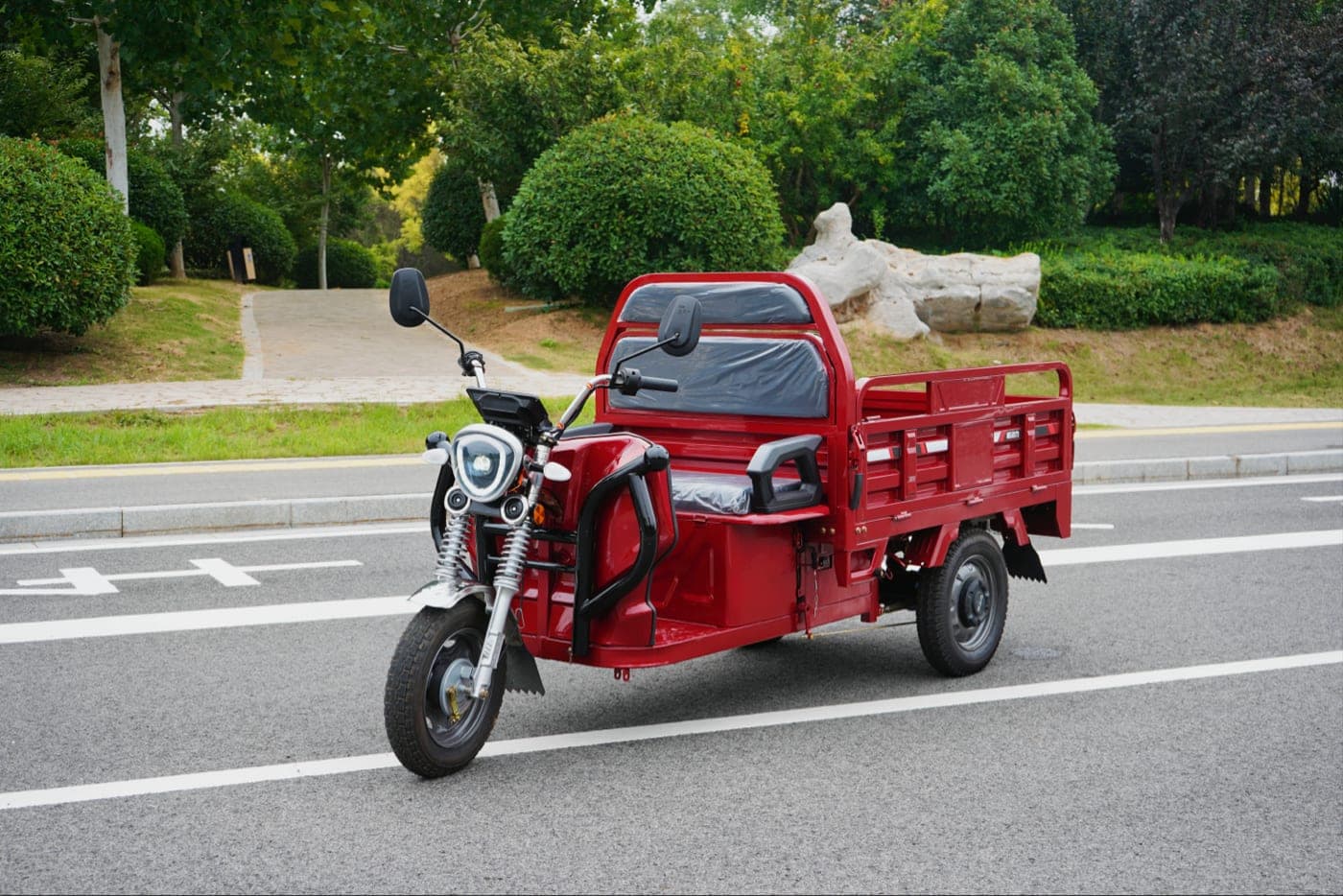
Electric Cargo Tricycle Buyer's Guide: Load Capacity, Range & Wholesale Pricing
The electric cargo tricycle is the workhorse of emerging-market logistics. From market vendors and farmers to courier fleets and construction crews, millions of small businesses move goods on three wheels -- and they are switching from petrol to electric for the same reason taxi operators are: an 80-90% cut in running costs. For importers, cargo trikes are a deep, repeatable market with models for every budget and load. This guide explains how to choose the right one and what to expect on price.
Who Buys Electric Cargo Tricycles
Cargo trikes serve an enormous range of small-business uses:
- Market and produce transport -- moving goods from wholesale markets to stalls
- Last-mile delivery -- parcels, water, gas cylinders, and e-commerce drops
- Agriculture -- hauling feed, harvest, and tools around farms and orchards
- Construction -- sand, cement, bricks, and site materials
- Municipal services -- waste collection and street cleaning
Because these are productivity tools that earn money every day, buyers care most about load capacity, durability, and running cost -- and they buy in volume when the price is right.
The Most Important Spec: Load Capacity
Load capacity is the headline number, and it scales with vehicle size and motor power:
| Bed Length | Typical Load | System | Best For |
|---|---|---|---|
| 1.1m | 200-400 kg | 48-60V / 650W | Parcels, light goods, city delivery |
| 1.3m | 600 kg | 72V / 1000W | General market and farm loads |
| 1.5m | up to 1,500 kg | 60V / 1200-1800W | Heavy mixed cargo, lithium option |
| 1.6m | 800 kg | 60V / 1200W | Bulky goods, larger bed |
| 1.8m | up to 1,800 kg | 72V / 1800W | Construction, bulk produce, water drums |
A common mistake is over-buying capacity. A vendor moving vegetables does not need an 1,800 kg loader; a 400-600 kg model is cheaper, lighter on the battery, and easier to maneuver in tight markets. Match the vehicle to the real load and your customers get better value -- and you sell more units.
Motor, Voltage, and the Differential Axle
- Motor power (650W-1800W) determines how much the trike can pull and how well it climbs. Heavier beds need 1500W+.
- Voltage (48V/60V/72V) affects efficiency under load. 72V systems handle heavy cargo better and run cooler.
- Rear axle matters more than buyers expect. A differential rear axle lets the two rear wheels turn at different speeds in corners, which improves handling and tire life under load. Better cargo trikes use a reinforced differential or one-piece suspension axle for heavy duty.
For a deeper look at drivetrains, see our hub motors vs mid-drive motors guide.
Range and Battery Choice
Range runs from about 45 km on a small lead-acid model to 80-200 km on larger or lithium-equipped trikes. For most daily routes, 60-80 km is plenty -- operators recharge overnight. Where range or payload matters, lithium iron phosphate (LFP) packs add usable cycles and reduce weight; our LFP battery guide covers the trade-offs in detail.
Body Styles: Open, Cabin, and Box
Beyond the open-bed standard, cargo trikes come in several body styles:
- Open bed -- the classic, lowest-cost, most versatile design.
- Enclosed driver cabin -- a weatherproof steel cab with doors and windows protects the driver for all-day, all-weather work. Worth the premium for professional couriers.
- Closed box / van -- a fully enclosed lockable cargo box for secure express and parcel delivery, keeping goods dry and out of sight.
Offering a range of body styles lets you serve both budget vendors and professional fleets from the same supplier.
Wholesale Pricing in 2026
Factory-direct cargo tricycle pricing (ex-works, complete unit with battery and charger):
| Model | Configuration | Approx. Wholesale |
|---|---|---|
| 1.1m compact cargo | 48-60V / 650W, 200-400 kg | from $430 |
| 1.3m mid-size cargo | 72V / 1000W, 600 kg | from $620 |
| 1.5m heavy cargo | 60V / 1200-1800W, up to 1,500 kg | from $780 |
| 1.8m heavy-duty cargo | 72V / 1800W, up to 1,800 kg | from $950 |
| Enclosed-cabin cargo | 72V, weatherproof cab | from $1,250 |
These are ex-factory prices; freight, duty, and inland delivery make up your landed cost. Because cargo trikes are bulky, freight is a big line item -- which is why importers group-buy full containers to split shipping costs and lower the per-unit landed price.
Container Loading
Cargo trikes ship CKD (completely knocked down) to fit more units per container -- typically 50-80 compact trikes or 30-55 heavy models in a 40HQ. CKD packing requires light assembly on arrival but dramatically reduces freight per unit. See our container loading guide and FOB/CIF/DDU shipping terms explainer to plan your shipment.
Buying Checklist
- Size the bed to the real load -- don't over-buy capacity.
- Choose voltage and motor by duty -- 72V/1500W+ for heavy daily work.
- Check the rear axle -- differential or reinforced axle for heavy cargo.
- Decide body style -- open, cabin, or box per customer segment.
- Order CKD and group-buy to cut freight.
- Verify the supplier with our manufacturer checklist.
Start Sourcing
Electric cargo tricycles are a proven, high-volume import with a model for every budget and every load. Browse current cargo trike models and live container batches on our products page, and see how shared-container group buying lowers your cost on every unit.
Answer First
Frequently asked questions
Quick answers buyers usually need before they contact a factory or forwarder.
How much weight can an electric cargo tricycle carry?
Load capacity ranges from about 200 kg on a compact 48V model to 1,500-1,800 kg on a heavy-duty 72V/1800W model. Most commercial cargo trikes sold for import carry 400-800 kg, which covers the majority of market, agricultural and last-mile delivery work.
What size cargo tricycle should I import?
Match the bed length to the cargo. A 1.1m bed suits parcels and light goods; 1.3-1.5m handles general market and farm loads; 1.6-1.8m heavy-duty beds are for construction materials, water drums and bulk produce. Bigger beds need more motor power (1500-1800W) and a 72V system.
How much does an electric cargo tricycle cost wholesale?
Factory-direct prices start around $430 for a compact 1.1m 60V model and rise to roughly $1,350 for a heavy-duty 1.8m model or an enclosed-cabin version. Joining a shared-container group-buy lowers the per-unit freight on top of the factory price.
Lead-acid or lithium battery for a cargo tricycle?
Lead-acid is cheaper upfront and common on entry cargo trikes. Lithium (LFP) costs more but lasts 4-5x longer, weighs less (raising usable payload), and recharges faster. Heavy daily haulers usually justify lithium; light-duty users often start with lead-acid.
Related articles
More guides from the same topic cluster.
Shipping & Logistics
Four-Wheel Electric Vehicles for Business: Golf Carts & Mini Trucks Import Guide
Two- and three-wheelers dominate the emerging-market EV story, but a fast-growing category sits just above them: the **four-wheel low-speed electric vehicle (LSEV)**. These cover everything from utility golf carts that m
Shipping & Logistics
Electric Cargo Tricycles vs Passenger Tricycles: Choosing the Right Model for Your Market
The electric tricycle wholesale market is one of the fastest-growing segments in emerging-market mobility. From last-mile delivery fleets in Lagos to passenger transport networks in Nairobi, electric three-wheelers are r
Shipping & Logistics
What Is Container Group Buying? How Shared Shipping Cuts Your EV Import Costs by 33%
If you are a small dealer or distributor importing electric vehicles from China, you have probably felt the sting of container shipping costs. A single 40-foot high-cube container from Ningbo to Lagos costs thousands of