Four-Wheel Electric Vehicles for Business: Golf Carts & Mini Trucks Import Guide
Two- and three-wheelers dominate the emerging-market EV story, but a fast-growing category sits just above them: the **four-wheel low-speed electric vehicle (LSEV)**. These cover everything from utility golf carts that m
Last reviewed on May 30, 2026
Quick Take
Two- and three-wheelers dominate the emerging-market EV story, but a fast-growing category sits just above them: the **four-wheel low-speed electric vehicle (LSEV)**. These cover everything from utility golf carts that m
Four-Wheel Electric Vehicles for Business: Golf Carts & Mini Trucks Import Guide
Two- and three-wheelers dominate the emerging-market EV story, but a fast-growing category sits just above them: the four-wheel low-speed electric vehicle (LSEV). These cover everything from utility golf carts that move people and light loads around resorts and estates to compact electric mini trucks that handle urban delivery. For importers looking to move up-market from tricycles -- or to serve resorts, estates, farms, factories, and delivery fleets -- four-wheel EVs open a higher-ticket, higher-margin product line. This guide explains the two main categories, their use cases, and wholesale pricing.
Two Categories, Two Markets
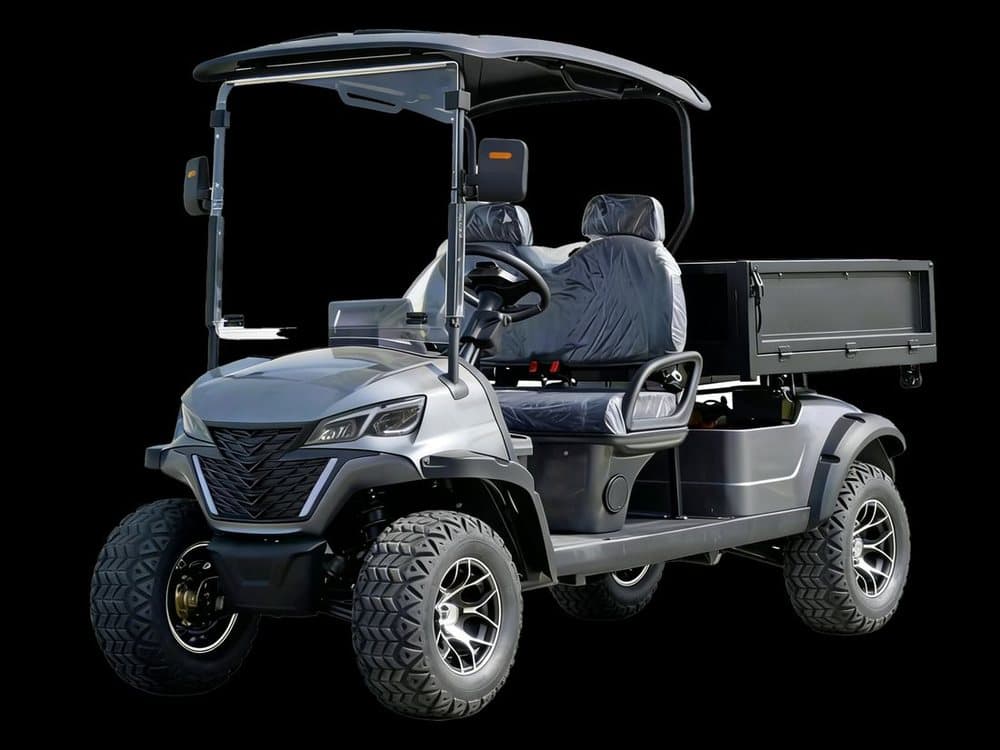
Utility & Golf Carts
A four-wheel cart with bench seating, a canopy roof, and usually a small rear cargo bed. Modern versions add SUV-style styling, a windshield, and a lifted suspension on off-road tires so they handle gravel and grass, not just smooth cart paths. Buyers include:
- Resorts, hotels, and tourist sites moving guests and luggage
- Estates, gated communities, and campuses for staff and security patrols
- Farms and orchards for light hauling and personnel transport
- Warehouses and industrial parks for internal logistics
The appeal is silent, zero-emission operation and near-zero running cost compared with petrol buggies.
Electric Mini Trucks
A compact four-wheel pickup with a fully enclosed two-seat cab and an open cargo bed. Think of it as a small EV truck at tricycle-friendly pricing. Mini trucks carry up to about 1,000 kg and provide weather protection for the driver -- a real advantage over an open cargo tricycle for professional delivery work. Buyers include:
- Urban delivery and courier fleets needing an enclosed, car-like cab
- Small wholesalers and distributors moving stock between locations
- Municipal and facility services for maintenance and light cargo
Specifications That Matter
| Spec | Utility Golf Cart | Electric Mini Truck |
|---|---|---|
| Layout | Bench seats + cargo bed | Enclosed cab + cargo bed |
| Motor | 3000-4000W AC | 3000-5000W AC |
| Top speed | ~40 km/h | ~45 km/h |
| Range | 60-100 km | 80-120 km |
| Load | ~300 kg | up to 1,000 kg |
| Battery | Lead-acid or lithium | Lead-acid or lithium |
| Brakes | Hydraulic disc | Hydraulic disc |
AC motors are standard at this size -- they deliver the torque to move a heavier four-wheel chassis and tolerate continuous duty better than small DC hub motors. Hydraulic disc brakes on all wheels are important for safe stopping with a load. As always, battery chemistry decides total cost of ownership: lithium (LFP) lasts far longer and weighs less, while lead-acid lowers the purchase price for buyers on a budget.
Why Add Four-Wheel EVs to Your Catalog
- Higher ticket, higher margin. A single four-wheel EV sells for more than several tricycles, improving revenue per container.
- New customer segments. Resorts, estates, and delivery fleets are different buyers than tuk-tuk operators -- adding four-wheelers widens your market.
- Premium positioning. Enclosed cabs and modern styling let you serve customers who have outgrown open three-wheelers.
- Year-round demand. Utility carts sell to tourism and facilities; mini trucks sell to logistics -- two demand cycles that rarely dip at the same time.
Wholesale Pricing in 2026
Factory-direct four-wheel EV pricing (ex-works, complete unit with battery and charger):
| Model | Configuration | Approx. Wholesale |
|---|---|---|
| Electric mini truck (enclosed cab) | 72V, up to 1,000 kg | from $2,680 |
| Utility & golf cart (cargo bed) | 72V, lifted off-road | from $2,800 |
Because four-wheelers are larger, freight is a bigger share of landed cost than it is for tricycles -- typically 10-12 units fit in a 40HQ container. That makes shared-container group-buying especially valuable here: splitting the container with other buyers keeps your per-unit shipping reasonable on these higher-value vehicles.
Compliance and Homologation
Most four-wheel EVs are classified as low-speed electric vehicles (LSEVs) with a top speed around 40-45 km/h. Road-legal status depends on local LSEV and mini-truck rules, which vary widely. Many units are used on private property (resorts, estates, farms, industrial sites) where homologation is not required, while road use needs local approval. Always confirm the rules in your destination market and request the supplier's certificates before ordering. Our certification guide covers the documentation involved.
Sourcing Checklist
- Pick the category -- utility cart for people/light loads, mini truck for cargo.
- Confirm motor and brakes -- AC motor and hydraulic discs at this size.
- Choose battery by duty -- lithium for heavy daily use, lead-acid to hit a price point.
- Check LSEV/road rules in your market before road-use orders.
- Group-buy the container to manage freight on these larger units.
- Verify the supplier with our manufacturer checklist.
Start Sourcing
Four-wheel electric vehicles let you move up-market from tricycles into higher-value sales and new customer segments -- resorts, estates, and delivery fleets. Browse current golf cart and mini-truck models and live container batches on our products page, and see how group buying keeps freight affordable on these larger vehicles.
Answer First
Frequently asked questions
Quick answers buyers usually need before they contact a factory or forwarder.
What is a four-wheel electric utility vehicle used for?
Four-wheel electric vehicles cover two main jobs: utility/golf carts for moving people and light loads around resorts, estates, farms, campuses and warehouses; and electric mini trucks for urban delivery and light commercial cargo of up to 1,000 kg. Both run on battery power at low operating cost.
How much does an electric golf cart or mini truck cost wholesale?
Factory-direct four-wheel electric vehicles start around $2,680 for an electric mini pickup truck and $2,800 for a utility golf cart with cargo bed and lifted suspension. Prices vary with battery type (lead-acid vs lithium) and options. Group-buying a shared container lowers the per-unit freight.
Are four-wheel electric vehicles street legal?
Most are classified as low-speed electric vehicles (LSEVs) with a top speed around 40-45 km/h. Street-legal status depends on local rules for LSEVs and mini trucks. They are widely used on private property (resorts, estates, farms, industrial sites) and, in many markets, on local roads. Confirm homologation before importing for road use.
How many four-wheel EVs fit in a container?
Because they are larger than tricycles, four-wheel vehicles pack fewer per container -- roughly 10-12 units in a 40HQ depending on model and CKD/SKD packing. Sharing a container through a group-buy keeps the per-unit freight manageable.
Related articles
More guides from the same topic cluster.
Shipping & Logistics
Electric Cargo Tricycle Buyer's Guide: Load Capacity, Range & Wholesale Pricing
The electric cargo tricycle is the workhorse of emerging-market logistics. From market vendors and farmers to courier fleets and construction crews, millions of small businesses move goods on three wheels -- and they are
Shipping & Logistics
What Is Container Group Buying? How Shared Shipping Cuts Your EV Import Costs by 33%
If you are a small dealer or distributor importing electric vehicles from China, you have probably felt the sting of container shipping costs. A single 40-foot high-cube container from Ningbo to Lagos costs thousands of
Shipping & Logistics
Electric Cargo Tricycles vs Passenger Tricycles: Choosing the Right Model for Your Market
The electric tricycle wholesale market is one of the fastest-growing segments in emerging-market mobility. From last-mile delivery fleets in Lagos to passenger transport networks in Nairobi, electric three-wheelers are r