What Is Container Group Buying? How Shared Shipping Cuts Your EV Import Costs by 33%
If you are a small dealer or distributor importing electric vehicles from China, you have probably felt the sting of container shipping costs. A single 40-foot high-cube container from Ningbo to Lagos costs thousands of
Last reviewed on February 23, 2026
Quick Take
If you are a small dealer or distributor importing electric vehicles from China, you have probably felt the sting of container shipping costs. A single 40-foot high-cube container from Ningbo to Lagos costs thousands of
What Is Container Group Buying? How Shared Shipping Cuts Your EV Import Costs by 33%
If you are a small dealer or distributor importing electric vehicles from China, you have probably felt the sting of container shipping costs. A single 40-foot high-cube container from Ningbo to Lagos costs thousands of dollars whether you ship 36 electric motorcycles or just 5. That is where container group buying changes everything.
Container group buying -- also called shared shipping or container sharing -- is a logistics model where multiple independent buyers pool their orders into a single container. Each buyer pays only for the space their units occupy, rather than absorbing the cost of an entire container. The result is straightforward: per-unit freight drops by as much as 33% compared to shipping a partially filled container on your own.
How Container Sharing Works: The Basic Model
The concept is simple. A shipping container has a fixed cost regardless of whether it is 30% full or 100% full. When you ship alone with a half-empty container, you are paying for air. Container group buying eliminates that wasted space by matching buyers headed to the same destination port.
Here is how the freight tiers work on the EV GroupBuy platform:
- Empty or low-fill container (0-24% capacity): You pay 1.5x the base freight rate per unit. This is what happens when you ship solo with very few units.
- Full container (100% capacity): You pay exactly 1.0x the base freight rate. Every slot is filled, every dollar is optimized.
The difference between these two extremes represents a potential saving of 33% on your per-unit shipping cost.
A Real-World Example: Mexico Veracruz Route
Let us walk through actual numbers for a popular route. Say you are importing electric scooters (2W category) from China to Veracruz, Mexico.
Base freight rate: $85 per unit (at full container, 36 units)
Scenario 1 -- You ship alone with 8 units:
Your container is far from full. At the low-fill multiplier (1.5x), your per-unit freight becomes $127.50. For 8 units, that is $1,020 in total shipping.
Scenario 2 -- You join a group buy batch and the container fills to 36 units:
At the full-container rate (1.0x), your per-unit freight stays at the base rate of $85.00. For those same 8 units, you now pay $680 in shipping.
Your savings: $42.50 per unit, or $340 total on just 8 units.
Scale that to a business importing 50-100 units per quarter, and you are looking at thousands of dollars in annual savings -- money that goes directly to your bottom line or lets you price more competitively in your local market.
How the Platform Batches Orders
Unlike placing an ad hoc order and hoping someone else ships to the same port, EV GroupBuy uses a structured batching system. Here is how it works:
-
Batch Window: Each batch stays open for 21 days. This gives enough time for multiple buyers to join while keeping delivery timelines predictable.
-
Target Quantities: Each product category has a target fill level for a full container:
- 2W (electric motorcycles/scooters): 36 units per 40HQ container
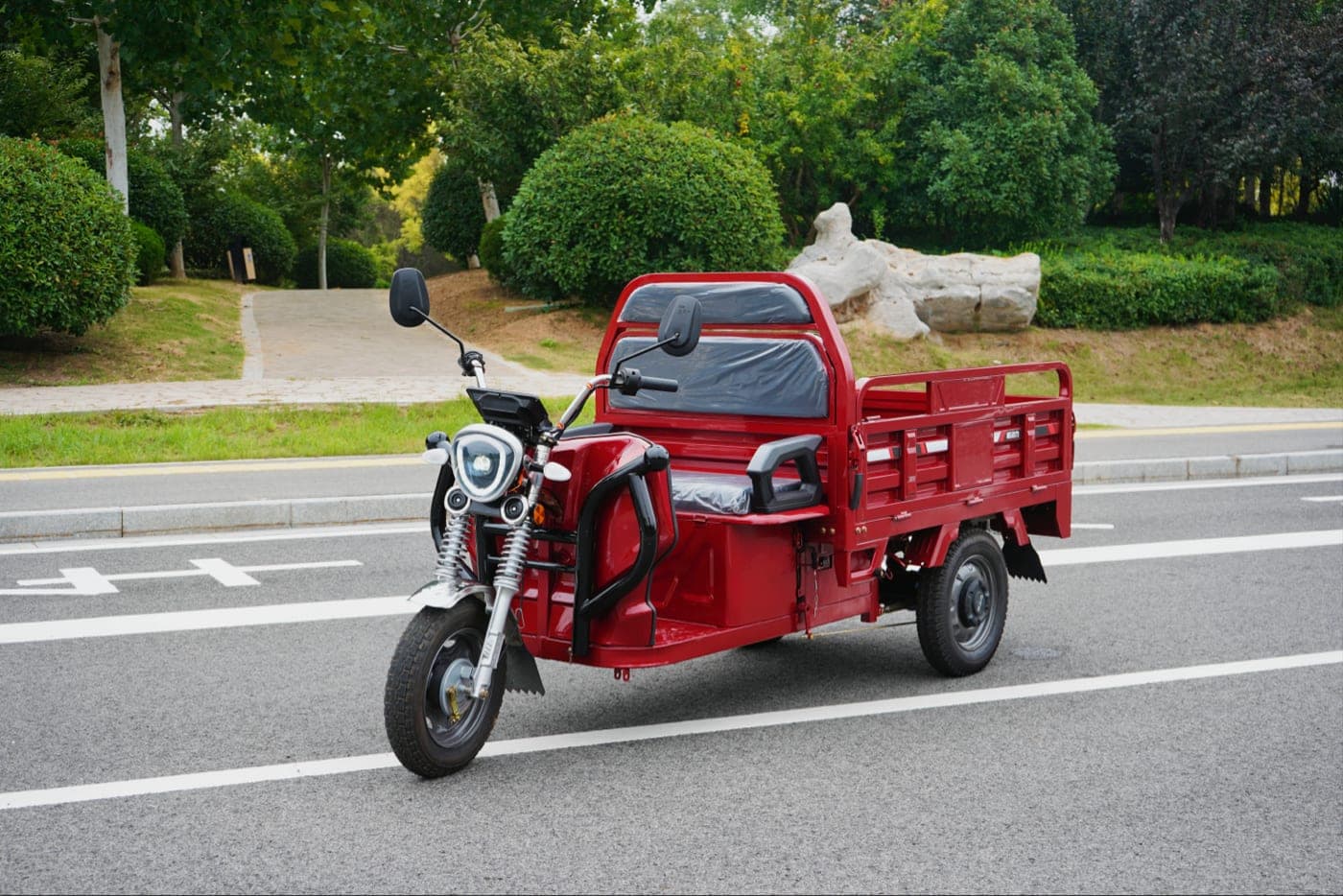
- 3W (electric tricycles): 20 units per 40HQ container
-
Dynamic Pricing: As more buyers join a batch, the per-unit freight decreases in real time. You can see the current fill level and estimated freight on every product page.
-
Port Matching: Batches are organized by destination port. Buyers headed to Lagos are grouped together, buyers headed to Veracruz are in a separate batch, and so on.
-
Automatic Batch Assignment: When your order is verified, the platform automatically assigns you to an open batch matching your port and product category. If no batch exists, a new one is created.
How This Differs from Alibaba and Traditional Wholesale
You might wonder: why not just buy on Alibaba or contact a trading company? There are important differences.
Alibaba and trading companies typically require you to fill an entire container yourself to get factory-direct pricing. Their minimum order quantities (MOQs) are set at container-level volumes -- 30-40 units for motorcycles, 16-20 for tricycles. If you cannot meet that MOQ, you either pay a premium per unit or deal with a middleman who marks up 15-30%.
Traditional wholesalers may offer smaller quantities, but they have already built their margin into the price. You are paying for their inventory risk, warehousing, and profit on top of the factory price.
Container group buying removes both problems:
- No high MOQ: You can order as few as 2-5 units and still access container-level freight rates, because the platform aggregates your order with others.
- Factory-direct pricing: The platform works directly with verified Chinese manufacturers, so you get the same unit price a large buyer would, without the trading company markup.
- Transparent freight: You see exactly what the base freight is and how much you save as the container fills. There are no hidden logistics fees buried in the product price.
Who Benefits Most from Container Group Buying?
This model is particularly valuable for:
- Small dealers in emerging markets across Africa, Latin America, the Middle East, and South Asia who want to test new EV models without committing to a full container.
- First-time importers who need 5-10 units to validate demand in their local market before scaling up.
- Regional distributors who import regularly but whose volumes fluctuate month to month.
- Entrepreneurs launching last-mile delivery or ride-hailing fleets who need a cost-effective way to acquire vehicles.
In all these cases, the math favors group buying. You get lower per-unit costs, access to factory-direct products with proper certifications, and predictable shipping timelines.
The Bottom Line: Pay for Space You Use, Not Space You Waste
Container group buying is not a complicated financial instrument or a speculative scheme. It is a straightforward logistics optimization: fill containers completely, divide costs fairly, and let everyone save.
On the EV GroupBuy platform, this process is automated and transparent. You browse products, add units to your cart, and the system handles batch assignment, freight calculation, and container optimization. The 21-day batch window ensures you do not wait indefinitely, and the tiered pricing means every additional buyer who joins your batch puts money back in your pocket.
Ready to see how much you can save on your next EV shipment? Browse available products and check the current batch fill levels and freight estimates for your destination port. Join a batch today and stop paying for empty container space.
Answer First
Frequently asked questions
Quick answers buyers usually need before they contact a factory or forwarder.
How many units do I need to join a container group buy?
Most buyers can join with as few as 2 to 5 units because the platform combines orders from multiple importers headed to the same destination port.
How much can shared container shipping reduce EV import costs?
If you would otherwise ship in a low-fill container, shared batching can reduce per-unit freight by roughly 20% to 33%, depending on how full the final container gets.
Is container group buying slower than booking a full container alone?
Usually the tradeoff is limited because batches run on a defined window, such as 21 days, so buyers get lower freight without waiting indefinitely for other orders.
Related articles
More guides from the same topic cluster.
Shipping & Logistics
Electric Cargo Tricycle Buyer's Guide: Load Capacity, Range & Wholesale Pricing
The electric cargo tricycle is the workhorse of emerging-market logistics. From market vendors and farmers to courier fleets and construction crews, millions of small businesses move goods on three wheels -- and they are
Shipping & Logistics
Four-Wheel Electric Vehicles for Business: Golf Carts & Mini Trucks Import Guide
Two- and three-wheelers dominate the emerging-market EV story, but a fast-growing category sits just above them: the **four-wheel low-speed electric vehicle (LSEV)**. These cover everything from utility golf carts that m
Shipping & Logistics
Electric Cargo Tricycles vs Passenger Tricycles: Choosing the Right Model for Your Market
The electric tricycle wholesale market is one of the fastest-growing segments in emerging-market mobility. From last-mile delivery fleets in Lagos to passenger transport networks in Nairobi, electric three-wheelers are r