Electric Rickshaws from China to South Asia: Bangladesh, Pakistan & India Buyer's Guide
South Asia is the largest three-wheeler market on the planet. Nowhere else do rickshaws, auto-rickshaws, and three-wheeled vehicles play such a central role in daily transportation. Bangladesh alone has an estimated 2.5
Last reviewed on February 23, 2026
Quick Take
South Asia is the largest three-wheeler market on the planet. Nowhere else do rickshaws, auto-rickshaws, and three-wheeled vehicles play such a central role in daily transportation. Bangladesh alone has an estimated 2.5
Electric Rickshaws from China to South Asia: Bangladesh, Pakistan & India Buyer's Guide
South Asia is the largest three-wheeler market on the planet. Nowhere else do rickshaws, auto-rickshaws, and three-wheeled vehicles play such a central role in daily transportation. Bangladesh alone has an estimated 2.5 million battery-powered easy bikes on its roads. Pakistan is undergoing a rapid transition from CNG and petrol rickshaws to electric models. India's e-rickshaw fleet has surpassed 3 million units and continues to grow at 25-30% annually.
For importers looking to enter or scale in this market, China offers the most cost-effective source of electric rickshaws, with factory prices ranging from $680 to $1,380 depending on configuration. Combined with some of the lowest freight costs globally due to short transit distances, the South Asia-China electric rickshaw trade represents one of the most accessible B2B opportunities in the EV space.
This guide covers the three major South Asian markets, port logistics, pricing, regulations, and the practical details you need to place your first wholesale order.
The South Asian Three-Wheeler Market: Scale and Opportunity
To appreciate the scale of this market, consider the numbers:
Bangladesh: The country has approximately 2.5 million battery-powered easy bikes providing short-distance passenger transport across cities and rural areas. The majority of these are approaching the end of their useful life after 3-5 years of heavy commercial use, creating an enormous replacement market. Additionally, new routes and growing urbanization drive demand for fresh fleet additions. The Bangladesh government actively encourages electric three-wheelers as replacements for polluting two-stroke auto-rickshaws.
Pakistan: The traditional CNG and petrol rickshaw fleet numbers over 1 million vehicles in cities like Lahore, Karachi, Rawalpindi, Faisalabad, and Peshawar. Rising CNG prices and government electrification policies are accelerating the shift to electric models. Pakistan's Ehsaas and Green Pakistan initiatives provide financial incentives for electric vehicle adoption, making this a market with both demand pull and policy push.
India: India's e-rickshaw market is the largest in the world by unit volume. Concentrated in states like Uttar Pradesh, Bihar, West Bengal, Delhi NCR, and Assam, e-rickshaws serve as affordable last-mile transport for millions of daily commuters. The Indian government's FAME II subsidy scheme (extended and enhanced) provides direct purchase subsidies for electric three-wheelers, further stimulating demand.
The combined replacement and new-demand opportunity across these three countries exceeds 1 million units annually.
Port Logistics and Freight Costs
South Asia enjoys some of the lowest freight costs from China due to geographic proximity. Here are the primary ports and estimated shipping costs:
| Destination Port | Country | Freight/Unit (3W) | Transit Days | Units per 40HQ |
|---|---|---|---|---|
| Chittagong | Bangladesh | $75 | 15-18 | 18-22 |
| Karachi | Pakistan | $78 | 12-16 | 18-22 |
| Nhava Sheva (Mumbai) | India | $70 | 15-20 | 18-22 |
| Kolkata | India | $72 | 12-16 | 18-22 |
| Port Qasim | Pakistan | $80 | 13-17 | 18-22 |
Freight costs shown are per-unit estimates when the container is fully loaded. A 40-foot high-cube container typically holds 18-22 electric rickshaws depending on the model dimensions and whether they are shipped fully assembled or semi-knocked-down (SKD).
Transit times of 12-20 days are among the shortest for any major EV trade route. This means faster inventory turnover, lower working capital requirements, and the ability to respond quickly to market demand fluctuations.
Through EV GroupBuy's container sharing model, importers who need only 3-5 units can join an open batch headed to their port and pay the same per-unit freight as a full-container buyer.
Passenger vs Cargo Models
Electric rickshaws in South Asia serve two distinct functions, and the specifications differ accordingly:
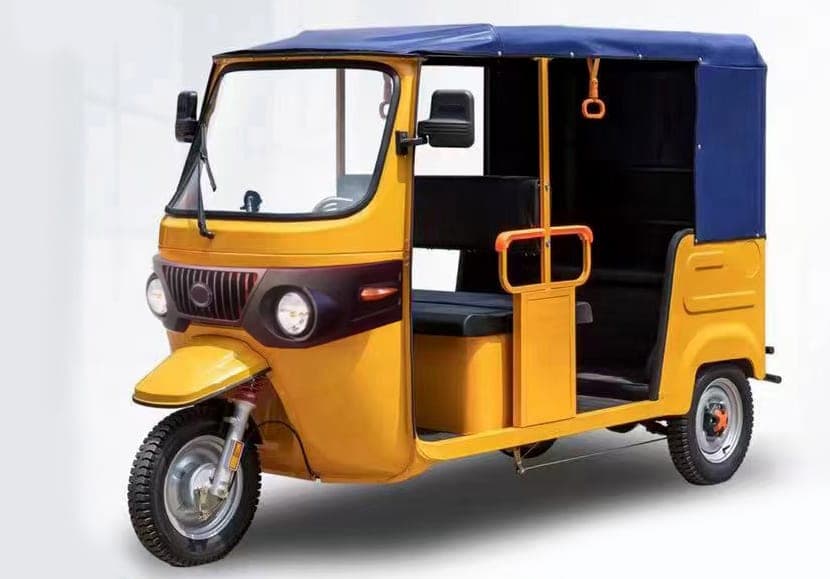
Passenger Rickshaws (E-Rickshaws / Easy Bikes)
These carry 3-6 passengers on short routes of 2-10 km. They are the backbone of urban and peri-urban transport in all three countries.
- Motor: 800W-1500W BLDC
- Battery: 48V-60V, 80-120Ah (lead-acid common; LFP premium)
- Speed: 25-35 km/h (speed-limited for safety regulations)
- Range: 80-120 km per charge
- Passenger capacity: 4+1 (driver) standard; 6+1 in some Bangladesh models
- Price range: $680-$950 EXW
Cargo Rickshaws (E-Loaders)
Designed for goods transport -- vegetables, building materials, e-commerce packages, water containers, and general freight.
- Motor: 1000W-2000W BLDC
- Battery: 60V-72V, 100-150Ah
- Speed: 25-40 km/h
- Load capacity: 300-500 kg payload
- Cargo bed dimensions: Typically 1.5m x 1.2m flat bed or enclosed box
- Price range: $880-$1,380 EXW
For most importers, the passenger variant represents higher volume and faster sales velocity, while the cargo variant carries higher margins per unit. A balanced initial order might allocate 70% to passenger models and 30% to cargo models.
Right-Hand Drive and Market-Specific Configurations
All three South Asian markets drive on the left side of the road, requiring right-hand drive (RHD) configuration. This is a critical specification to confirm with the factory before placing your order. Chinese domestic models are left-hand drive, but most established manufacturers maintain RHD production lines specifically for the South Asian export market.
Additional market-specific configurations to verify:
Bangladesh:
- Local easy bikes typically feature open sides with a canopy roof
- Battery box position must accommodate easy battery swapping (lead-acid batteries are swapped frequently)
- Front drum brake, rear drum brake is standard
- Color preferences: Green, blue, red
Pakistan:
- Enclosed or semi-enclosed passenger cabin preferred
- Stronger suspension for rougher road conditions
- Horn and indicator light compliance with local traffic regulations
- Color preferences: Yellow-green (traditional rickshaw colors), white, blue
India:
- Must comply with FAME II specifications to qualify for government subsidies (motor power limits, battery specifications, speed limits)
- ICAT or ARAI certification required for road registration
- L5 vehicle category classification
- Color preferences: Green (associated with eco-friendly), yellow (taxi), white
Battery Regulations and Considerations
Battery choice significantly impacts both the vehicle's price and its regulatory status:
Lead-acid batteries remain dominant in the South Asian e-rickshaw market because of their lower upfront cost ($120-$180 per set) and the existing ecosystem of battery dealers and recyclers. However, they require replacement every 8-14 months under commercial use, adding significant lifetime operating cost.
Lithium iron phosphate (LFP) batteries cost more upfront ($350-$600 per set) but last 3-5 years under the same operating conditions. The total cost of ownership over a 4-year vehicle life is 30-40% lower with LFP. Premium-tier importers are increasingly offering LFP as a differentiator.
Regulatory notes:
- Bangladesh: No specific battery chemistry restrictions for three-wheelers. Lead-acid dominates on cost.
- Pakistan: Increasing government preference for lithium batteries in new EV policy frameworks.
- India: FAME II subsidies apply only to vehicles with advanced batteries (lithium-ion). Lead-acid e-rickshaws do not qualify for government incentives.
If targeting the Indian subsidy market, LFP-equipped models are mandatory. For Bangladesh and Pakistan's mass market, offering both battery options maximizes your addressable customer base.
Pricing Breakdown: Factory to Customer
Understanding the full cost chain helps you price competitively in your local market:
| Cost Component | Passenger Model | Cargo Model |
|---|---|---|
| EXW factory price | $680-$950 | $880-$1,380 |
| Freight (group buy, full container) | $70-$80 | $70-$80 |
| Import duty (varies by country) | 10-25% of CIF | 10-25% of CIF |
| Local taxes (GST/VAT) | 5-18% | 5-18% |
| Customs clearing and handling | $30-$60 | $30-$60 |
| Inland transport | $15-$40 | $15-$40 |
| Estimated landed cost | $900-$1,450 | $1,150-$2,000 |
Retail prices in the local market typically range from 1.3x to 1.8x the landed cost depending on brand positioning, warranty offering, and after-sales service included. This means healthy margins of 30-80% are achievable.
The Replacement Market: Timing Your Entry
The single largest opportunity in the South Asian electric rickshaw market is the replacement cycle. The first wave of Chinese-manufactured easy bikes that flooded into Bangladesh in 2016-2019 are now 6-8 years old. Lead-acid battery rickshaws that have been through 4-6 battery replacements are reaching the point where frame corrosion, motor degradation, and controller failures make replacement more economical than repair.
This replacement wave is estimated at 300,000-500,000 units per year in Bangladesh alone. Existing rickshaw operators already have routes, customers, and operating knowledge -- they simply need a new vehicle. The sales cycle for replacement buyers is dramatically shorter than for first-time buyers.
Importers who establish supply relationships and local distribution now will be positioned to capture this replacement demand over the next 3-5 years.
Getting Started: Your First South Asia Order
Whether you are an established vehicle dealer in Dhaka, a CNG rickshaw company in Lahore transitioning to electric, or an entrepreneur entering the Indian e-rickshaw market, here is how to begin:
- Identify your market segment: Passenger, cargo, or both. Lead-acid or LFP battery.
- Confirm RHD configuration and any market-specific requirements for your country.
- Select models from our catalog: Browse electric rickshaws and three-wheelers with full specifications and pricing.
- Join a container batch: See how group buying works and check open batches for Chittagong, Karachi, or Nhava Sheva.
- Receive complete documentation: Commercial invoice, packing list, certificate of origin, battery certifications, and vehicle compliance documents.
The South Asian electric rickshaw market offers exceptional unit economics, massive scale, and a replacement cycle that guarantees sustained demand. Position your business to serve this market by placing your first group buy order today.
Related articles
More guides from the same topic cluster.
Shipping & Logistics
Electric Cargo Tricycle Buyer's Guide: Load Capacity, Range & Wholesale Pricing
The electric cargo tricycle is the workhorse of emerging-market logistics. From market vendors and farmers to courier fleets and construction crews, millions of small businesses move goods on three wheels -- and they are
Shipping & Logistics
Four-Wheel Electric Vehicles for Business: Golf Carts & Mini Trucks Import Guide
Two- and three-wheelers dominate the emerging-market EV story, but a fast-growing category sits just above them: the **four-wheel low-speed electric vehicle (LSEV)**. These cover everything from utility golf carts that m
Shipping & Logistics
What Is Container Group Buying? How Shared Shipping Cuts Your EV Import Costs by 33%
If you are a small dealer or distributor importing electric vehicles from China, you have probably felt the sting of container shipping costs. A single 40-foot high-cube container from Ningbo to Lagos costs thousands of