Hub Motors vs Mid-Drive Motors: Which Motor Type Is Right for Your EV Business?
When sourcing electric motorcycles and scooters from China for wholesale distribution, the motor type is one of the most consequential decisions you will make. It affects your product's performance, your customers' maint
Last reviewed on February 23, 2026
Quick Take
When sourcing electric motorcycles and scooters from China for wholesale distribution, the motor type is one of the most consequential decisions you will make. It affects your product's performance, your customers' maint
Hub Motors vs Mid-Drive Motors: Which Motor Type Is Right for Your EV Business?
When sourcing electric motorcycles and scooters from China for wholesale distribution, the motor type is one of the most consequential decisions you will make. It affects your product's performance, your customers' maintenance costs, your after-sales liability, and ultimately your competitiveness in your target market.
The two dominant motor architectures in the electric two-wheeler and three-wheeler space are hub motors and mid-drive motors. Each has clear strengths and weaknesses, and the right choice depends on where you are selling, what terrain your customers ride on, and what level of after-sales service you can support.
How Hub Motors Work
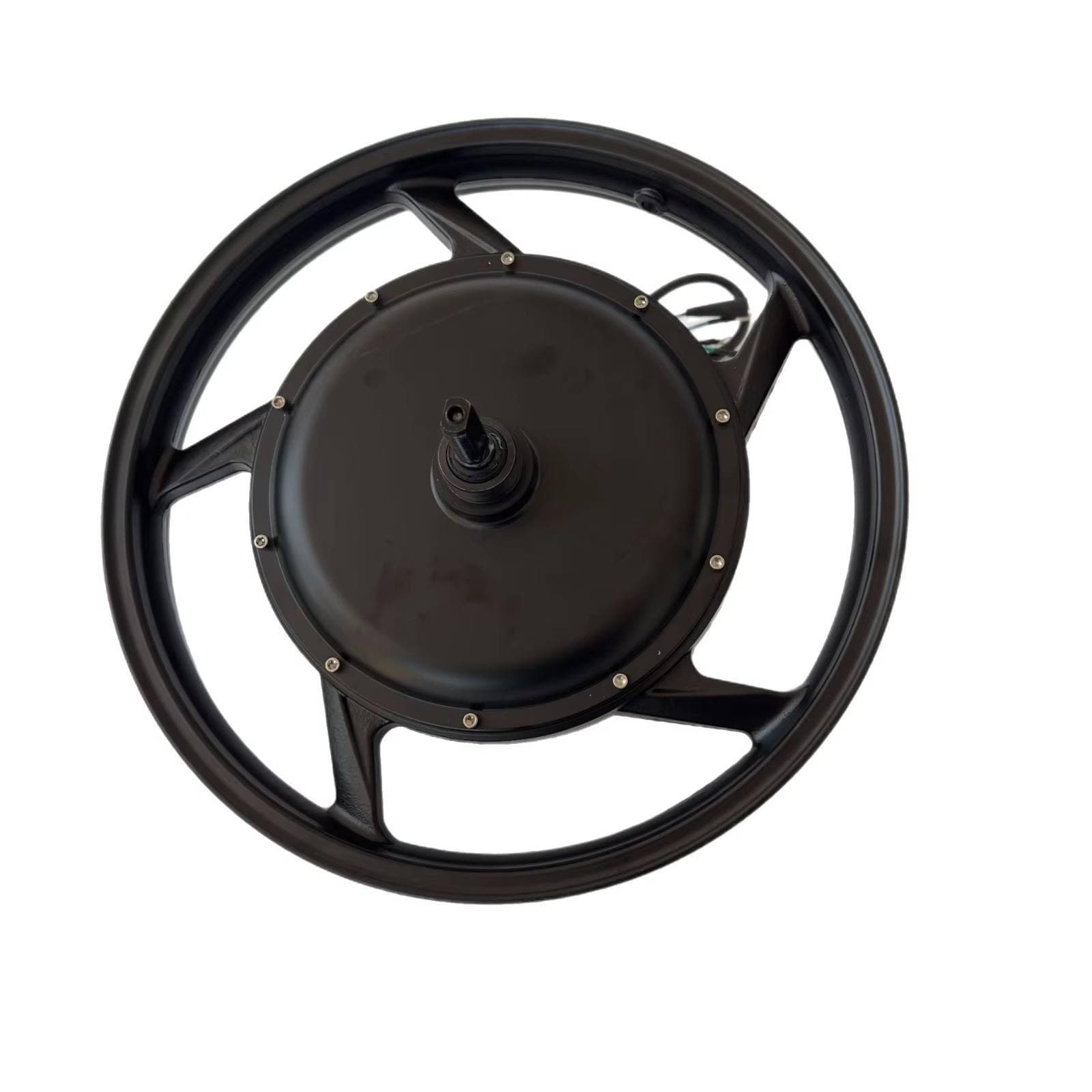
A hub motor is integrated directly into the wheel -- typically the rear wheel. The motor is the wheel hub. There is no chain, belt, or external drivetrain connecting the motor to the wheel. When current flows from the controller to the motor, the wheel turns.
Key characteristics of hub motors:
- Direct drive or geared: Direct-drive hub motors have no internal gears and are virtually silent. Geared hub motors use a planetary gear reduction for higher torque at lower speeds.
- Self-contained: All moving parts are sealed inside the wheel hub, protected from dust, water, and road debris.
- No drivetrain wear: No chain to stretch, no sprockets to replace, no belt to snap.
- Regenerative braking capable: Hub motors can recover energy during deceleration, extending range by 5-15%.
- Simple installation: The motor is pre-built into the wheel. Replacement means swapping the entire wheel assembly.
Hub motors in the Chinese EV manufacturing ecosystem are available from 500W to 5000W, though the 1000W-3000W range covers the vast majority of commercial two-wheeler and three-wheeler applications.
How Mid-Drive Motors Work
A mid-drive motor is mounted at the center of the vehicle frame, typically at or near the pedal/footrest area. It drives the rear wheel through a chain or belt transmission, similar to how a gasoline engine delivers power.
Key characteristics of mid-drive motors:
- Mechanical advantage: The motor's output passes through a chain and sprocket system, allowing gear ratios to multiply torque. This gives mid-drive systems significantly better hill-climbing ability.
- Lower unsprung weight: Because the motor sits on the frame rather than in the wheel, the wheel is lighter. This improves ride quality and suspension performance.
- Higher efficiency on varied terrain: Mid-drive motors can operate in their optimal RPM range more consistently when paired with multi-speed transmissions.
- Chain and sprocket maintenance: The drivetrain requires regular lubrication, chain tension adjustment, and periodic chain/sprocket replacement.
- More complex repairs: Diagnosing and repairing drivetrain issues requires more mechanical skill than hub motor wheel swaps.
Mid-drive motors for electric motorcycles typically range from 1000W to 8000W, with the higher power ratings serving off-road and performance applications.
BLDC Technology: The Common Foundation
Both hub motors and mid-drive motors in modern Chinese-manufactured EVs use brushless DC (BLDC) technology. Unlike older brushed motors, BLDC motors have no physical brushes making contact with the commutator. This eliminates the primary wear component, extending motor life to 50,000-100,000 km or more.
BLDC motors are controlled by electronic motor controllers that manage phase timing, current delivery, and speed regulation. Two controller technologies dominate the market:
Sine Wave Controllers: Produce smooth, quiet operation with less electrical noise. Preferred for urban commuter vehicles where ride refinement matters. Slightly more expensive.
FOC (Field-Oriented Control) Controllers: The most advanced option. FOC controllers dynamically optimize motor efficiency across all speed and load conditions. They deliver smoother acceleration, better low-speed torque, and 10-15% greater energy efficiency compared to basic square-wave controllers. FOC is increasingly standard on mid-range and premium models.
When specifying motors for your wholesale order, confirm which controller type is included. The controller determines how the motor actually performs in real-world conditions.
Performance Comparison: Specs Side by Side
Here is how hub motors and mid-drive motors compare across the metrics that matter most for commercial applications:
| Characteristic | Hub Motor | Mid-Drive Motor |
|---|---|---|
| Torque at low speed | Moderate | High (with gear reduction) |
| Hill climbing | Adequate for gentle grades | Superior for steep terrain |
| Top speed efficiency | High | Moderate (drivetrain losses) |
| Maintenance frequency | Very low | Moderate (chain/sprocket wear) |
| Noise level | Very quiet | Slightly louder (chain noise) |
| Replacement cost | $80-$200 (whole wheel) | $120-$300 (motor + chain kit) |
| Typical power range | 1000W-3000W | 1000W-5000W+ |
| Weight penalty | In-wheel (higher unsprung) | On-frame (better handling) |
| Waterproofing | Excellent (sealed hub) | Good (requires frame sealing) |
| Repair skill required | Low (swap wheel) | Moderate (drivetrain knowledge) |
Price Difference at Wholesale
Motor cost is a significant component of the vehicle's bill of materials. At wholesale volume (100+ motors), typical pricing from Chinese manufacturers:
- 1000W hub motor: $45-$65
- 1500W hub motor: $55-$80
- 3000W hub motor: $85-$130
- 1000W mid-drive motor: $70-$95
- 1500W mid-drive motor: $90-$130
- 3000W mid-drive motor: $140-$220
Mid-drive motors carry a 40-70% price premium over equivalent-wattage hub motors. When this difference is multiplied across a container load of 30-40 vehicles, it materially affects your landed cost and retail margin.
Additionally, mid-drive vehicles require chain and sprocket assemblies ($8-$15 per vehicle) and ongoing replacement parts inventory, adding to your total supply chain cost.
Which Markets Suit Which Motor Type?
The terrain and infrastructure of your target market should drive your motor selection.
Hub motors dominate in Africa and South Asia for several interconnected reasons:
- Flat to moderate terrain: Most major cities in West Africa, East Africa, Bangladesh, and Pakistan are situated on relatively flat ground. Hub motors perform excellently on flat and gently rolling terrain.
- Limited service infrastructure: In markets where trained EV mechanics are scarce, the hub motor's simplicity is a decisive advantage. Riders and small-shop mechanics can replace an entire hub motor wheel in under an hour with basic tools.
- Dust and weather exposure: The sealed hub design resists the red dust of Saharan regions, monsoon rains in South Asia, and the sandy conditions of Middle Eastern markets without requiring additional protection.
- Cost sensitivity: Buyers in these markets are acutely price-conscious. The lower cost of hub motor vehicles directly translates to faster sales and broader market reach.
Mid-drive motors make sense in specific applications:
- Mountainous terrain: Cities like Bogota (2,600m elevation with steep streets), Addis Ababa, or Kathmandu benefit from mid-drive torque.
- Heavy cargo applications: Three-wheelers carrying 400-500 kg of cargo uphill need the mechanical advantage that mid-drive systems provide.
- Performance-oriented markets: Where buyers prioritize riding dynamics and are willing to pay a premium for better handling and acceleration.
Controller Compatibility: What to Verify Before Ordering
When placing a wholesale order, ensure the motor and controller are properly matched. Mismatched components cause performance problems, premature failure, and warranty claims. Verify the following:
- Voltage match: A 72V motor requires a 72V controller. Mixing voltages damages both components.
- Current rating: The controller's continuous current rating must meet or exceed the motor's peak draw. A 3000W 72V motor draws approximately 42A continuous -- ensure the controller handles at least 45-50A.
- Phase compatibility: Confirm the motor's phase wire count and hall sensor configuration match the controller's input.
- Communication protocol: If the vehicle has a dashboard display, the controller must communicate speed, battery level, and error codes through a compatible protocol.
Browse our product catalog to see motor type, controller specification, and pricing for every model. Each listing specifies whether the vehicle uses a hub motor or mid-drive configuration.
Making Your Decision
For most B2B buyers importing electric two-wheelers and three-wheelers into Africa, Latin America, the Middle East, and South Asia, hub motors are the recommended starting point. They offer the lowest total cost of ownership, the simplest after-sales experience, and proven reliability in the operating conditions your customers will encounter.
Reserve mid-drive configurations for markets or applications where terrain demands genuinely require higher torque at low speeds, and where your distribution network can support the additional maintenance requirements.
Whichever motor type you choose, EV GroupBuy sources from factories that use quality BLDC motors with proper controller matching and full certification documentation. See how our group buying process works and start building your next container order today.
Related articles
More guides from the same topic cluster.
Product Buying Guides
72V 3000W Electric Motorcycle: Full Performance Specs and Wholesale Pricing
The 72V 3000W electric motorcycle represents the high-performance tier of Chinese-manufactured two-wheelers, built for buyers who need genuine speed, range, and reliability. Whether you are supplying urban commuters in L
Shipping & Logistics
Electric Cargo Tricycle Buyer's Guide: Load Capacity, Range & Wholesale Pricing
The electric cargo tricycle is the workhorse of emerging-market logistics. From market vendors and farmers to courier fleets and construction crews, millions of small businesses move goods on three wheels -- and they are
Battery & Certification
Electric Mobile Vending & Cold-Chain Tricycles: A Turnkey Food Business on Wheels
Most electric tricycles move goods. A small but fast-growing category does something more interesting: it **becomes the business**. The electric cold-chain vending tricycle is a three-wheeler fitted with a refrigerated f