FOB vs CIF vs DDU: Which Shipping Term Is Best for Importing EVs from China?
If you have ever requested a quote from a Chinese electric vehicle manufacturer, one of the first things they will ask is: "FOB or CIF?" Your answer affects what you pay, what responsibilities you take on, and where risk
Last reviewed on February 23, 2026
Quick Take
If you have ever requested a quote from a Chinese electric vehicle manufacturer, one of the first things they will ask is: "FOB or CIF?" Your answer affects what you pay, what responsibilities you take on, and where risk
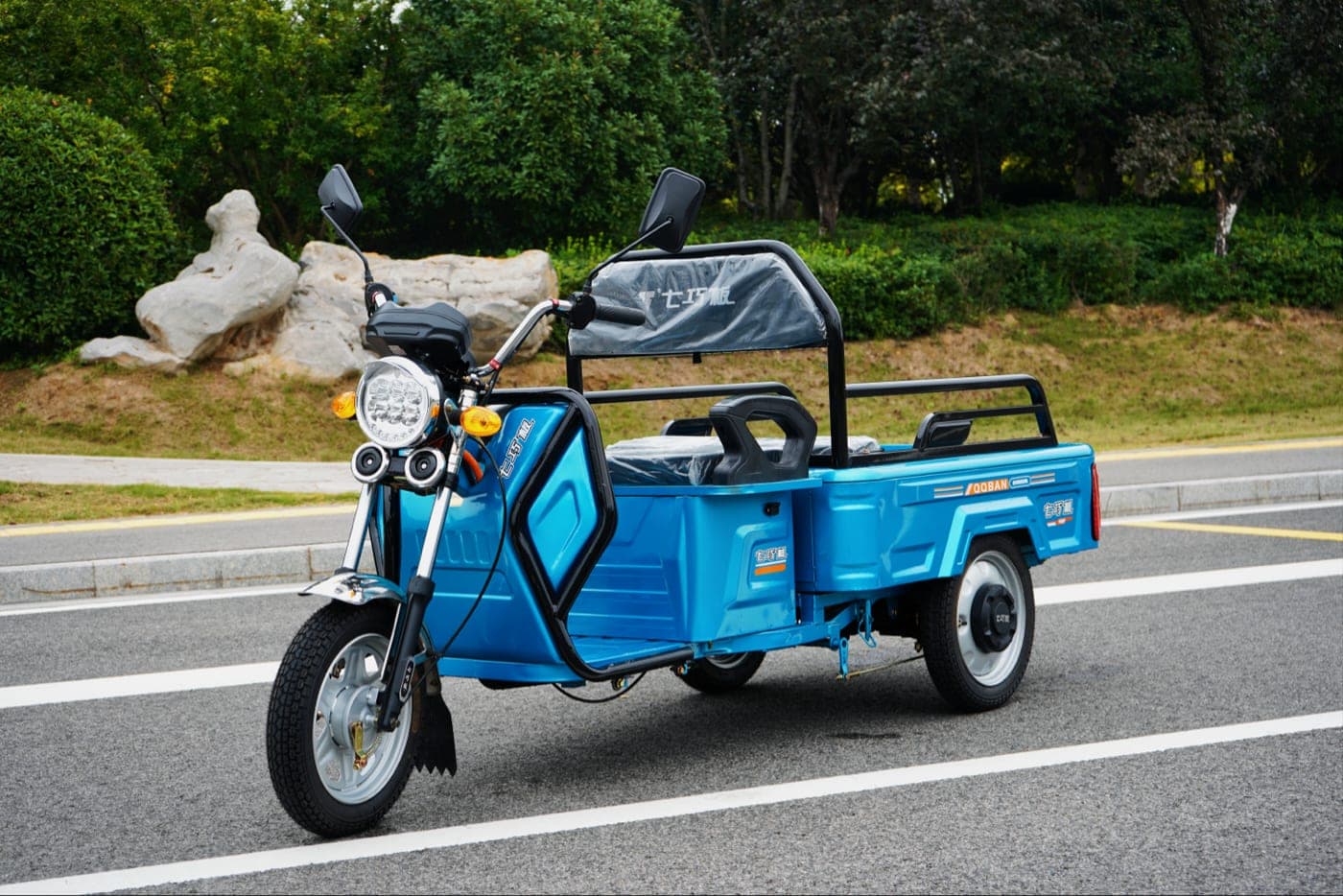
FOB vs CIF vs DDU: Which Shipping Term Is Best for Importing EVs from China?
If you have ever requested a quote from a Chinese electric vehicle manufacturer, one of the first things they will ask is: "FOB or CIF?" Your answer affects what you pay, what responsibilities you take on, and where risk transfers from seller to buyer.
For many importers -- especially first-timers in Africa, Latin America, the Middle East, and South Asia -- these three-letter codes can be confusing. This guide breaks down the three most common shipping terms (Incoterms) used in the Chinese EV export trade, explains the pros and cons of each, and helps you decide which one makes the most sense for your situation.
Understanding Incoterms: The Basics
Incoterms (International Commercial Terms) are standardized trade terms published by the International Chamber of Commerce (ICC). They define who is responsible for what during the shipment of goods from seller to buyer. The three most relevant Incoterms for EV imports from China are FOB, CIF, and DDU (now technically DAP under Incoterms 2020, but DDU is still widely used in practice).
Each term specifies three things:
- Cost responsibility: Who pays for transportation, insurance, and handling at each stage
- Risk transfer point: At what point does the risk of loss or damage shift from seller to buyer
- Documentation responsibility: Who arranges export/import clearance, shipping documents, and insurance
FOB (Free On Board): The Industry Standard
Definition: The seller delivers the goods onto the vessel at the port of origin. From that moment, all costs and risks transfer to the buyer.
What the seller (Chinese factory) handles:
- Manufacturing and quality inspection
- Inland transport from factory to Chinese export port (typically Ningbo, Shanghai, or Shenzhen)
- Export customs clearance
- Loading onto the vessel
What you (the buyer) handle:
- Ocean freight from Chinese port to your destination port
- Marine cargo insurance
- Import customs clearance at destination
- Unloading, duties, taxes, and inland delivery to your warehouse
FOB price example for an electric motorcycle:
| Component | Cost |
|---|---|
| Factory price (FOB) | $1,320 |
| Ocean freight (your arrangement) | $85 per unit |
| Insurance (your arrangement) | $15 per unit |
| Total landed at port | $1,420 |
Why Most Chinese EV Factories Prefer FOB
FOB is overwhelmingly the most common term in Chinese EV exports, and there are clear reasons:
- Simplicity for the factory: They manufacture, deliver to port, and their obligation ends. No need to manage international logistics.
- Lower quote price: The FOB price looks lower because freight and insurance are excluded. This makes the factory's quote more competitive when compared against others.
- Risk management: The factory avoids liability for what happens during ocean transit -- delays, damage, port congestion, and customs issues at destination are all the buyer's problem.
- Currency consistency: The factory quotes in USD FOB and knows exactly what they earn, without exchange rate fluctuations on freight costs in different currencies.
Pros of FOB for Buyers
- Control over shipping: You choose the freight forwarder, shipping line, and route. This lets you compare rates and find the best deal.
- Insurance flexibility: You select your own marine cargo insurance policy and coverage level.
- Transparency: You see exactly what the product costs versus what shipping costs. No hidden freight margins.
- Group buy compatibility: FOB is the ideal term for container group buying because freight is handled separately and can be split among multiple buyers.
Cons of FOB for Buyers
- You manage logistics: If you are new to importing, arranging ocean freight, insurance, and customs clearance can be daunting.
- Freight cost risk: If shipping rates spike (as they did during 2021-2022), you absorb the increase.
- More moving parts: You need relationships with a freight forwarder, customs broker, and insurance provider.
CIF (Cost, Insurance, and Freight)
Definition: The seller delivers the goods onto the vessel at the port of origin AND pays for ocean freight and basic insurance to the destination port. Risk still transfers at the port of origin.
What the seller handles:
- Everything in FOB, plus:
- Ocean freight to the named destination port
- Marine cargo insurance (minimum coverage -- typically ICC C or 110% of invoice value)
What you handle:
- Import customs clearance at destination
- Unloading charges at destination port
- Duties, taxes, and inland delivery
CIF price example for an electric motorcycle:
| Component | Cost |
|---|---|
| Factory price (CIF Veracruz) | $1,450 |
| Freight included in price | ~$95/unit |
| Insurance included in price | ~$35/unit |
| Your cost at destination port | $1,450 |
The Hidden Cost of CIF
Notice something in that example? The factory-arranged freight is $95 per unit, while in the FOB example, buyer-arranged freight was $85. That $10 difference exists because:
- Factories mark up freight. They get a quote from their forwarder and add 10-20% as a service fee or margin.
- Insurance is minimal. The CIF-included insurance is typically the minimum allowed -- ICC C coverage, which only covers major casualties (sinking, fire, collision). It does not cover common risks like water damage, container falling, or theft.
- Less competitive pressure. When freight is bundled into the product price, you cannot easily compare it against other freight options.
Pros of CIF for Buyers
- Simplicity: One price covers everything to your port. Fewer moving parts to manage.
- Good for beginners: If you have never arranged international freight, CIF lets the factory handle it.
- Predictable cost: You know your total landed cost upfront (minus duties and inland transport).
Cons of CIF for Buyers
- Higher total cost: Factory markup on freight and insurance typically adds 5-15% to what you would pay arranging it yourself.
- Minimal insurance: CIF insurance rarely covers the full range of risks. You may need to purchase additional coverage anyway.
- Risk still transfers at origin: This is the most misunderstood aspect of CIF. Even though the seller pays for freight and insurance, the risk of loss transfers at the port of origin. If goods are damaged in transit, you must file the insurance claim yourself -- the factory's obligation ended at loading.
- No group buy benefit: With CIF, freight is built into the unit price, so you cannot benefit from shared container freight savings.
DDU (Delivered Duty Unpaid) / DAP (Delivered at Place)
Definition: The seller delivers the goods to a named destination (your warehouse, port, or city), with all transportation costs paid, but without paying import duties and taxes.
What the seller handles:
- Everything in CIF, plus:
- Destination port handling and unloading
- Inland transport to the named destination (if beyond the port)
What you handle:
- Import customs clearance
- Import duties and taxes
- Final delivery from customs to your facility (if not included in the named destination)
DDU price example for an electric motorcycle:
| Component | Cost |
|---|---|
| Factory price (DDU Lagos) | $1,620 |
| All freight, handling, insurance included | ~$300/unit |
| Your remaining costs: duties + last mile | ~$200 |
When DDU Makes Sense
DDU is relatively uncommon in the Chinese EV export trade, but it can make sense in specific situations:
- Turnkey operations: If you are a small operator who wants vehicles delivered to your city with zero logistics management.
- Countries with complex port procedures: Some African and South Asian ports have challenging customs and handling processes that local expertise is needed to navigate.
- Factory has a logistics partner in your country: Some larger Chinese EV manufacturers have established freight forwarding partnerships in key markets.
Pros of DDU for Buyers
- Maximum convenience: The seller handles almost everything. You just clear customs and pay duties.
- Reduced logistics risk: The seller assumes responsibility for the entire transport chain.
- Door-to-door simplicity: One price from factory to your location.
Cons of DDU for Buyers
- Highest total cost: Convenience comes at a premium. DDU prices are typically 15-25% higher than FOB + self-arranged freight.
- Less control: You cannot choose the shipping route, timeline, or insurance level.
- Customs risk: If customs clearance is delayed or goods are held for inspection, costs can escalate and the seller may not be responsive since their obligation ends at delivery.
- Fewer factories offer it: Most Chinese EV factories quote FOB exclusively and do not have the logistics infrastructure for DDU.
Cost Comparison: Which Term Saves You the Most?
Here is a side-by-side comparison for importing 10 electric motorcycles to Veracruz, Mexico:
| Cost Component | FOB | CIF | DDU |
|---|---|---|---|
| Unit price | $1,320 | $1,450 | $1,620 |
| Freight (per unit) | $85 | Included | Included |
| Insurance (per unit) | $15 | Included | Included |
| Port handling (per unit) | $25 | $25 | Included |
| Total per unit | $1,445 | $1,475 | $1,620 |
| Total for 10 units | $14,450 | $14,750 | $16,200 |
| Extra cost vs FOB | -- | +$300 | +$1,750 |
FOB with self-arranged freight is the most cost-effective option in nearly every scenario. The savings compound at higher volumes.
How Group Buying Platforms Handle FOB + Freight
The EV GroupBuy platform uses a FOB + platform-arranged freight model that combines the cost advantages of FOB with the simplicity of CIF:
- Products are priced at FOB -- you see the transparent factory price.
- Freight is calculated separately based on your destination port and the current batch fill level.
- As more buyers join the batch, the per-unit freight decreases automatically. A full container achieves the base freight rate.
- Insurance is included in the platform freight calculation at full coverage (not minimum CIF coverage).
- You see both numbers -- product price and freight -- so there is complete cost transparency.
This model gives you FOB-level pricing with CIF-level convenience, and the added benefit of group buy freight savings that are not available under any traditional Incoterm arrangement.
The Bottom Line: Choosing Your Shipping Term
| Your Situation | Recommended Term |
|---|---|
| Experienced importer with freight contacts | FOB |
| First-time importer, small order | CIF or Group Buy (FOB + platform freight) |
| Want maximum savings | FOB or Group Buy |
| Need door-to-door delivery | DDU (if available) |
| Importing with other buyers | FOB via group buying |
For most B2B buyers importing electric vehicles from China, FOB combined with group buying freight delivers the best combination of low cost, transparency, and manageable complexity.
Want to see FOB prices and real-time freight estimates for your destination? Browse our product catalog where every listing shows the FOB price and current per-unit freight based on batch fill levels.
Related articles
More guides from the same topic cluster.
Shipping & Logistics
Electric Cargo Tricycle Buyer's Guide: Load Capacity, Range & Wholesale Pricing
The electric cargo tricycle is the workhorse of emerging-market logistics. From market vendors and farmers to courier fleets and construction crews, millions of small businesses move goods on three wheels -- and they are
Shipping & Logistics
Four-Wheel Electric Vehicles for Business: Golf Carts & Mini Trucks Import Guide
Two- and three-wheelers dominate the emerging-market EV story, but a fast-growing category sits just above them: the **four-wheel low-speed electric vehicle (LSEV)**. These cover everything from utility golf carts that m
Shipping & Logistics
What Is Container Group Buying? How Shared Shipping Cuts Your EV Import Costs by 33%
If you are a small dealer or distributor importing electric vehicles from China, you have probably felt the sting of container shipping costs. A single 40-foot high-cube container from Ningbo to Lagos costs thousands of