Electric Vehicle Market in Africa 2026: The $4.8 Billion Opportunity
The electric vehicle market in Africa is no longer a promise on the horizon -- it is a rapidly expanding commercial reality. Industry analysts estimate the continent's EV market will reach **$4.8 billion** in 2026, drive
Last reviewed on February 23, 2026
Quick Take
The electric vehicle market in Africa is no longer a promise on the horizon -- it is a rapidly expanding commercial reality. Industry analysts estimate the continent's EV market will reach **$4.8 billion** in 2026, drive
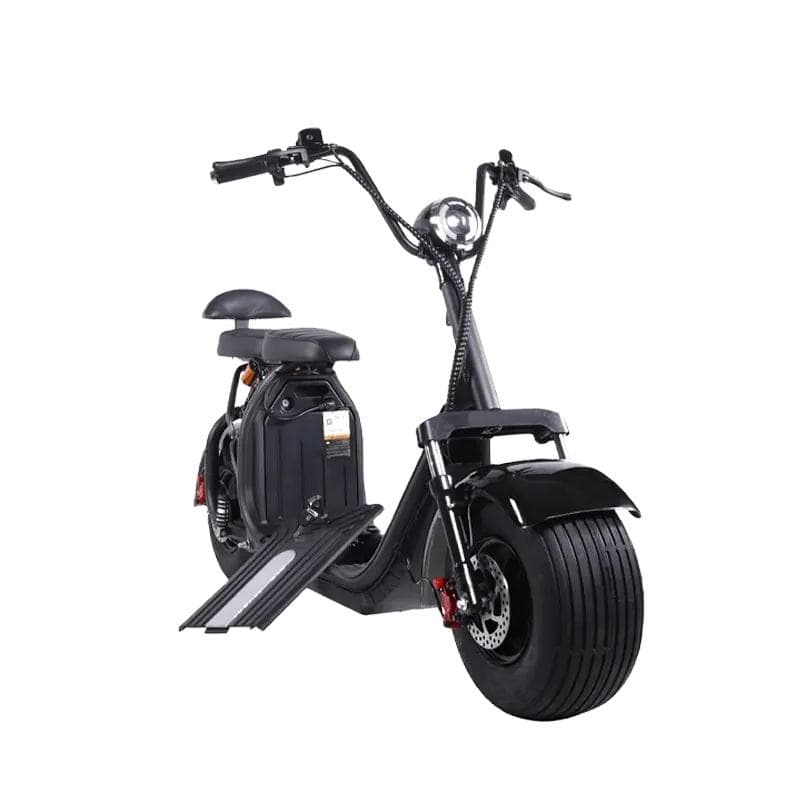
Electric Vehicle Market in Africa 2026: The $4.8 Billion Opportunity
The electric vehicle market in Africa is no longer a promise on the horizon -- it is a rapidly expanding commercial reality. Industry analysts estimate the continent's EV market will reach $4.8 billion in 2026, driven by explosive growth in two-wheelers and three-wheelers rather than the passenger cars that dominate EV headlines in North America and Europe. For B2B importers, manufacturers, and distributors, this represents one of the most compelling market entry opportunities in the global mobility sector. This article maps the landscape, identifies the highest-potential markets, and provides a practical framework for entering the African EV market.
Market Size and Growth Trajectory
Africa's EV market has grown at a compound annual rate of approximately 45-55% since 2022, fueled by three converging forces:
1. Fuel Cost Crisis: Across the continent, petrol prices have risen 60-150% since 2020 due to currency depreciation, subsidy removal, and global energy volatility. In Nigeria, Kenya, Ghana, and Egypt -- four of Africa's largest economies -- fuel costs now represent the single largest operating expense for transportation businesses. Electric vehicles offer an 80-90% reduction in energy costs per kilometer.
2. Urbanization: Africa is urbanizing faster than any other continent. The UN projects that 60% of Africans will live in cities by 2050, up from 44% in 2025. This urban growth generates enormous demand for affordable, efficient last-mile transportation -- precisely the niche where electric two-wheelers and three-wheelers excel.
3. Government Policy: At least 15 African countries have introduced EV-favorable policies since 2023, including reduced import duties, tax exemptions, and charging infrastructure mandates. Kenya, Rwanda, and Morocco have been particularly aggressive, while Nigeria and Ghana are accelerating their policy frameworks.
The $4.8 billion market breaks down approximately as follows:
| Segment | Estimated Market Size | Share | Growth Rate |
|---|---|---|---|
| Electric Two-Wheelers (2W) | $2.1 billion | 44% | 55% YoY |
| Electric Three-Wheelers (3W) | $1.4 billion | 29% | 50% YoY |
| Electric Passenger Cars | $0.8 billion | 17% | 30% YoY |
| Batteries & Components | $0.5 billion | 10% | 60% YoY |
The two-wheeler and three-wheeler segments -- which account for 73% of the total market -- are where Chinese manufacturers and B2B importers have the strongest competitive position. These are the segments covered by EV GroupBuy's product catalog.
Key Markets: Country-by-Country Analysis
Nigeria: Volume Leader
- Population: 230+ million
- Motorcycle Fleet: 5-8 million (okada)
- Three-Wheeler Fleet: 1.5+ million (keke napep)
- EV Import Duty: 10-15% (reduced)
- Key Port: Lagos (Apapa/Tin Can Island)
- Opportunity: Sheer volume. Nigeria's transportation fleet is the largest in sub-Saharan Africa, and even single-digit percentage penetration of electric represents hundreds of thousands of units.
Nigeria's path to electrification is driven by economics, not environmentalism. When a boda rider saves $4-5 per day by switching to electric, adoption is not ideological -- it is survival. Read our detailed guide to importing EVs to Nigeria.
Kenya: Innovation Hub
- Population: 56 million
- Motorcycle Fleet: 1.4+ million (boda boda)
- EV Import Duty: 10% (with excise exemption)
- Key Port: Mombasa
- Opportunity: Most advanced EV ecosystem in East Africa, with battery swap networks, mobile payment integration, and supportive regulation.
Kenya punches above its weight in EV adoption due to a tech-savvy population, strong mobile money infrastructure (M-Pesa), and a government actively incentivizing the transition. Multiple battery-swap startups have reached commercial scale in Nairobi. For a detailed import guide, see our electric boda boda Kenya article.
Ghana: West Africa's Gateway
- Population: 34 million
- Key Port: Tema
- Opportunity: Strategic gateway to the broader West African market (ECOWAS), with relatively efficient port infrastructure and a growing middle class.
Ghana's proximity to Nigeria, Togo, Benin, and Cote d'Ivoire makes it a natural distribution hub. Importers who establish Tema-based operations can serve multiple countries through overland distribution.
South Africa: Premium Market
- Population: 60 million
- Key Port: Durban
- Opportunity: Most developed economy on the continent, with established automotive distribution networks and higher purchasing power.
South Africa's EV market skews toward passenger cars and higher-end electric motorcycles. However, the delivery and logistics segment (electric cargo tricycles, delivery motorcycles) is growing rapidly as local e-commerce expands.
Tanzania: Emerging Fast
- Population: 65 million
- Key Port: Dar es Salaam
- Opportunity: Large motorcycle taxi market (bodaboda), growing rapidly with limited EV competition currently.
Tanzania's bodaboda culture mirrors Kenya's, and the Dar es Salaam port serves as a gateway to eastern Democratic Republic of Congo, Zambia, and Malawi.
Other High-Potential Markets
- Rwanda: Government mandate to phase out ICE motorcycles; most EV-progressive policy in Africa
- Uganda: Large boda boda market; Kampala is a key distribution point for East and Central Africa
- Egypt: North Africa's largest market; strong domestic assembly potential
- Ethiopia: Population of 126 million; Addis Ababa's EV policy is evolving rapidly
- Morocco: Manufacturing hub with EU trade agreements; assembly and re-export opportunity
Product Categories in Demand
Electric Motorcycles (2W)
The highest-volume product. Demand is concentrated in three sub-categories:
- Commuter models ($420-$650 EXW): Largest market by unit volume. 60V-72V, 1000W-2000W.
- Delivery models ($320-$480 EXW): Growing with e-commerce expansion. 48V-60V, 800W-1500W.
- Performance models ($580-$845 EXW): For markets where EVs compete with 125cc+ petrol bikes.
See our full guide to electric motorcycle categories for detailed specifications and pricing.
Electric Tricycles (3W)
Split between cargo and passenger applications:
- Cargo tricycles ($680-$1,080 EXW): Last-mile logistics, construction material transport, agricultural produce.
- Passenger tricycles ($880-$1,380 EXW): Taxi and shared transit (keke napep, tuk-tuk, bajaj).
Our cargo vs passenger tricycle comparison helps you determine which models fit your market.
LFP Battery Packs
Both as components inside vehicles and as standalone replacement/upgrade products:
- Replacement packs ($145-$420 EXW): Drop-in replacements for lead-acid batteries in existing vehicles.
- Swap-station inventory: Battery-as-a-service operators need large volumes of standardized packs.
Learn about LFP battery technology and why it dominates the African EV market.
How to Enter the African EV Market
Step 1: Market Selection
Choose your entry market based on three criteria:
- Personal network: Do you have contacts, language skills, or business relationships in a specific country?
- Regulatory clarity: Markets with established EV import policies (Kenya, Rwanda, Nigeria) reduce bureaucratic risk.
- Port efficiency: Mombasa, Tema, and Durban offer more predictable clearance than some West African ports.
Step 2: Product Selection
Start with the product category that has the most established demand in your chosen market. In Nigeria, that is motorcycles and keke napep. In Kenya, it is boda boda. In South Africa, it is delivery vehicles. Do not try to serve every segment at once.
Step 3: Supplier Partnership
Partner with a Chinese manufacturer that has proven export experience to your target market. Verify factory credentials, request samples, and negotiate spare parts terms before committing to volume. EV GroupBuy pre-vets manufacturers and provides transparent pricing to simplify this process.
Step 4: Start Small with Group Buying
Your first import should be a learning experience, not a bet-the-business gamble. Use container sharing through EV GroupBuy to import 5-15 units at full-container freight rates. Test the market, refine your pricing, and build customer relationships before scaling.
Step 5: Build the Ecosystem
The importers who win in African EV markets are not just selling vehicles -- they are building ecosystems:
- Spare parts supply chain: Stock critical components (tires, brakes, controllers, batteries)
- Service capability: Train local mechanics on electric vehicle maintenance
- Financing: Offer hire-purchase or pay-as-you-go models that match local income patterns
- Charging/swapping: Partner with or invest in charging infrastructure
The Time to Act Is Now
Africa's electric vehicle market is in its rapid-growth phase. First movers are establishing brands, distribution networks, and customer relationships that will compound over the coming decade. The $4.8 billion opportunity in 2026 is projected to exceed $12 billion by 2030 as battery costs continue to fall, charging infrastructure expands, and government policies tighten.
Browse available products on EV GroupBuy to see what is shipping to African ports right now. Learn how our group buying model works to make your first import affordable and low-risk. Or explore our market-specific guides for Nigeria and Kenya to dive deeper into the two largest opportunity markets.
The electrification of African transportation is not a question of if. It is a question of who will supply it. Position yourself on the right side of that question today.
Related articles
More guides from the same topic cluster.
Market Entry Guides
Electric Tuk-Tuk Buying Guide 2026: Specs, Prices & Best Models for Importers
The electric tuk-tuk -- known regionally as an auto-rickshaw, bajaji, keke, or three-wheeler taxi -- is one of the fastest-selling electric vehicles in emerging markets. As fuel prices climb and cities push for cleaner a
Market Entry Guides
Electric Boda Boda Revolution: Importing E-Motorcycles from China to Kenya
The boda boda is the backbone of Kenyan transportation. With an estimated 1.4 million motorcycle taxis operating across the country -- from downtown Nairobi to rural villages in Western Kenya -- the opportunity to import
Market Entry Guides
Electric Delivery Scooters: The Most In-Demand EV for Last-Mile Logistics
Across Africa, Latin America, the Middle East, and South Asia, one category of electric vehicle outsells every other: the delivery scooter. Food delivery apps, courier companies, e-commerce fulfillment services, and smal