Electric Delivery Scooters: The Most In-Demand EV for Last-Mile Logistics
Across Africa, Latin America, the Middle East, and South Asia, one category of electric vehicle outsells every other: the delivery scooter. Food delivery apps, courier companies, e-commerce fulfillment services, and smal
Last reviewed on February 23, 2026
Quick Take
Across Africa, Latin America, the Middle East, and South Asia, one category of electric vehicle outsells every other: the delivery scooter. Food delivery apps, courier companies, e-commerce fulfillment services, and smal
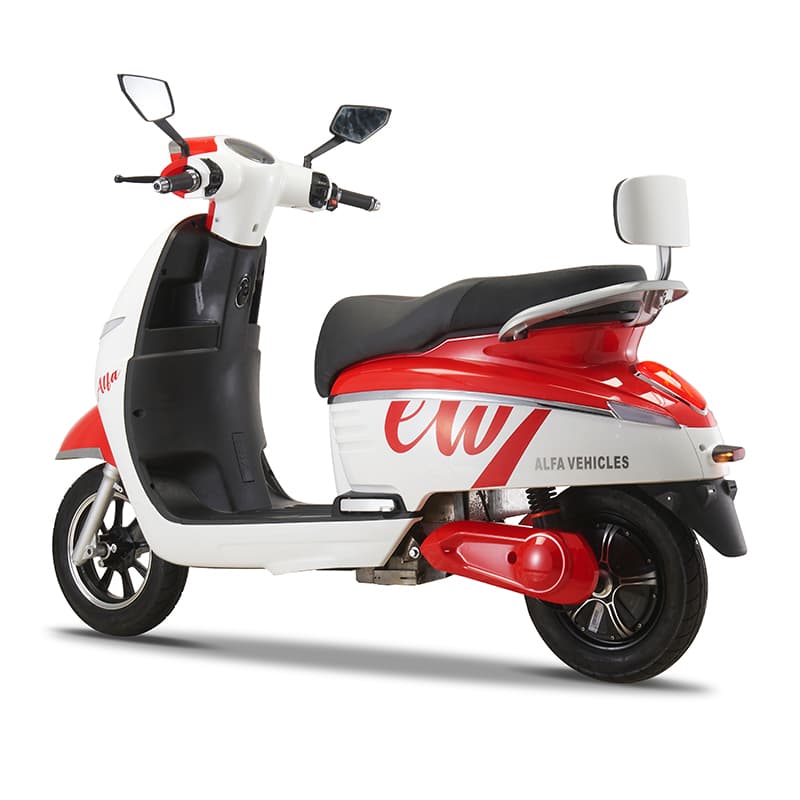
Electric Delivery Scooters: The Most In-Demand EV for Last-Mile Logistics
Across Africa, Latin America, the Middle East, and South Asia, one category of electric vehicle outsells every other: the delivery scooter. Food delivery apps, courier companies, e-commerce fulfillment services, and small business owners are all converging on the same realization -- gasoline-powered delivery bikes are too expensive to operate at scale, and electric delivery scooters have reached the price-performance threshold where switching makes immediate financial sense.
This article examines why electric delivery scooters have become the fastest-growing EV category in emerging markets, what specifications matter most for commercial use, and how fleet operators can calculate the return on investment before placing a wholesale order.
Why Delivery Scooters Dominate Emerging Market Demand
The surge in demand is driven by three converging forces.
First, the explosion of app-based delivery services. Platforms modeled on Uber Eats, Rappi, Glovo, and Jumia Food are expanding rapidly across cities in Mexico, Colombia, Nigeria, Kenya, Egypt, Pakistan, and India. Each of these platforms requires thousands of delivery riders, and those riders need affordable, reliable vehicles.
Second, fuel cost volatility. Gasoline prices in many emerging markets have increased 30-60% over the past three years due to subsidy removal, currency depreciation, and global supply disruptions. A rider spending $8-12 per day on fuel can reduce that to $0.50-1.00 in electricity costs with an electric scooter. Over a 300-day working year, that is $2,100-$3,300 saved per vehicle.
Third, regulatory momentum. Cities from Bogota to Nairobi to Lahore are implementing low-emission zones, restricting two-stroke motorcycles, and offering tax incentives for electric vehicle adoption. Commercial fleet operators who transition early avoid future compliance costs.
Key Specifications for Commercial Delivery Use
Not every electric scooter is suited for delivery work. Commercial use demands specific performance characteristics that casual commuter scooters do not provide. Here are the specifications that matter:
- Motor: 60V 1500W BLDC hub motor
- Battery: 60V 32Ah lithium iron phosphate (LFP)
- Range: 80 km per charge (at 25 km/h average speed with 80 kg load)
- Top Speed: 55 km/h
- Load Capacity: 120 kg (rider plus cargo)
- Cargo Platform: Reinforced rear rack rated for 40 kg, compatible with standard delivery boxes
- Charging Time: 4-6 hours standard; 2-3 hours fast charge
- Braking: Front disc, rear drum
- Waterproofing: IP54 rated
- Weight: 72 kg without battery
- EXW Price: $528
The 80 km range is calibrated for real-world delivery conditions, not laboratory testing at constant speed on flat road. It accounts for frequent stops, starts, acceleration, and the weight of packages. Most urban delivery riders cover 40-60 km per shift, leaving a comfortable margin.
View our full catalog of delivery-ready electric scooters to compare models and configurations.
Battery Swapping: The Fleet Operator Advantage
For high-utilization fleets where vehicles cannot afford 4-6 hours of downtime for charging, battery swapping changes the economics entirely.
The delivery scooter's battery is designed as a removable cassette that slides out from under the seat. A fully charged replacement battery slots in within 30 seconds. This means:
- Zero downtime: Riders swap batteries at a depot or partner location and continue working immediately
- Extended daily range: With two batteries per vehicle, effective daily range doubles to 160 km
- Centralized charging: Fleet operators charge batteries overnight at a warehouse using multi-bay charging stations, taking advantage of lower off-peak electricity rates
- Battery health monitoring: Centralized charging makes it practical to monitor battery health, balance cells, and retire degraded packs before they cause on-road failures
Fleet operators running 20 or more scooters typically purchase 1.5-2 batteries per vehicle, creating a rotation pool that keeps every vehicle on the road during peak delivery hours.
ROI Calculation for Fleet Operators
The financial case for electric delivery scooters is strongest when calculated at fleet scale. Here is a representative comparison for a 20-vehicle fleet over 24 months:
Gasoline Motorcycle Fleet (20 units)
- Vehicle cost: 20 x $650 = $13,000
- Fuel (24 months): 20 x $8/day x 600 days = $96,000
- Maintenance (24 months): 20 x $35/month x 24 = $16,800
- Total cost of ownership: $125,800
Electric Delivery Scooter Fleet (20 units)
- Vehicle cost: 20 x $528 = $10,560
- Freight (group buy): 20 x $75 = $1,500
- Electricity (24 months): 20 x $0.70/day x 600 days = $8,400
- Spare batteries (10 extra): 10 x $180 = $1,800
- Maintenance (24 months): 20 x $12/month x 24 = $5,760
- Total cost of ownership: $28,020
Savings over 24 months: $97,780 (78%)
Even accounting for upfront import logistics and the learning curve of transitioning from gasoline, the electric fleet pays for itself within the first 4-5 months through fuel and maintenance savings alone.
Container Loading and Group Buy Economics
The electric delivery scooter's compact dimensions allow efficient container utilization:
Container capacity: A standard 40HQ container holds 40 units in SKD (semi-knocked-down) packaging.
Through EV GroupBuy's container sharing model, you do not need to purchase all 40 units. You can order as few as 2-5 units and share the container with other buyers shipping to the same port. As the container fills, per-unit freight drops for everyone. Learn how our group buying batches work.
Typical freight costs per unit at full container load:
| Destination Port | Freight/Unit | Transit Days |
|---|---|---|
| Mombasa, Kenya | $72 | 25-30 |
| Lagos, Nigeria | $85 | 35-40 |
| Veracruz, Mexico | $78 | 28-32 |
| Karachi, Pakistan | $65 | 15-20 |
| Dar es Salaam, Tanzania | $75 | 22-28 |
Low Maintenance: The Operational Advantage
Fleet managers consistently report that maintenance cost reduction is the single most impactful benefit after fuel savings. Electric delivery scooters have approximately 80% fewer moving parts than gasoline motorcycles:
- No engine oil changes (gasoline bikes need oil every 2,000-3,000 km)
- No spark plugs, air filters, or carburetors
- No clutch cable or transmission (hub motor drives the wheel directly)
- Regenerative braking extends brake pad life by 40-60%
- No exhaust system to rust, crack, or replace
The primary maintenance items are tires, brake pads, and periodic battery health checks. For a fleet of 20 vehicles, this simplicity translates to lower parts inventory, fewer mechanic hours, and less vehicle downtime.
Getting Started with Your First Order
Whether you are a logistics company expanding your fleet, a delivery app launching in a new city, or an entrepreneur building a rental operation, the electric delivery scooter offers the fastest path to profitability in the EV space.
Here is how to begin:
- Select your port to see live freight rates and open container batches
- Choose your quantity -- start with a pilot batch of 5-10 units or go directly to fleet scale
- Join an open batch and share container space with other importers heading to your region
- Receive documentation including CE certification, UN38.3 battery reports, and commercial invoices
Browse delivery scooter models and current pricing or see how group buying reduces your costs.
The next open batch for delivery scooters is accepting orders now. Secure your allocation before the container fills.
Related articles
More guides from the same topic cluster.
Market Entry Guides
Electric Tuk-Tuk Buying Guide 2026: Specs, Prices & Best Models for Importers
The electric tuk-tuk -- known regionally as an auto-rickshaw, bajaji, keke, or three-wheeler taxi -- is one of the fastest-selling electric vehicles in emerging markets. As fuel prices climb and cities push for cleaner a
Market Entry Guides
Electric Boda Boda Revolution: Importing E-Motorcycles from China to Kenya
The boda boda is the backbone of Kenyan transportation. With an estimated 1.4 million motorcycle taxis operating across the country -- from downtown Nairobi to rural villages in Western Kenya -- the opportunity to import
Market Entry Guides
How to Start an Electric Motorcycle Dealership in Africa: A Complete Business Plan
Africa is in the middle of a two-wheeled revolution. With over 27 million motorcycles already on the continent and fuel prices climbing year after year, the demand for affordable electric alternatives is accelerating fas