How to Start an Electric Motorcycle Dealership in Africa: A Complete Business Plan
Africa is in the middle of a two-wheeled revolution. With over 27 million motorcycles already on the continent and fuel prices climbing year after year, the demand for affordable electric alternatives is accelerating fas
Last reviewed on February 23, 2026
Quick Take
Africa is in the middle of a two-wheeled revolution. With over 27 million motorcycles already on the continent and fuel prices climbing year after year, the demand for affordable electric alternatives is accelerating fas
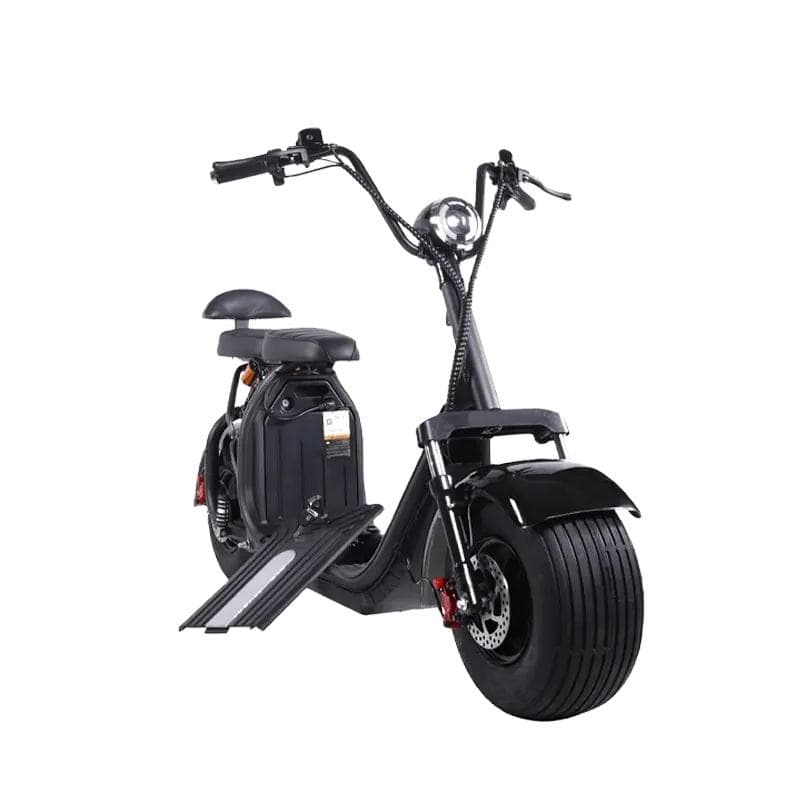
How to Start an Electric Motorcycle Dealership in Africa: A Complete Business Plan
Africa is in the middle of a two-wheeled revolution. With over 27 million motorcycles already on the continent and fuel prices climbing year after year, the demand for affordable electric alternatives is accelerating faster than any forecast predicted. For entrepreneurs ready to move early, starting an electric motorcycle business in Africa is one of the most compelling opportunities in emerging-market mobility today.
This guide walks you through every step of launching an electric motorcycle dealership, from initial market research to your first container delivery, after-sales setup, and scaling strategy. Whether you are targeting Nigeria, Kenya, Ghana, Tanzania, or any of the dozens of markets where petrol boda-bodas and okadas dominate, the fundamentals are the same.
Step 1: Market Research -- Choosing Your City and Country
Before you spend a single dollar, you need to understand the specific market you are entering. Africa is not one market; it is 54 countries with vastly different regulatory environments, consumer behaviors, and competitive landscapes.
Countries with the strongest opportunity in 2026:
- Nigeria -- The largest motorcycle market in Africa with an estimated 8-10 million two-wheelers on the road. Lagos, Kano, and Ibadan have massive demand for last-mile delivery and passenger transport. Some states have banned petrol motorcycles from certain roads, creating an opening for electric alternatives.
- Kenya -- Nairobi and Mombasa lead East Africa in EV adoption. Government incentives include VAT exemptions on electric vehicles. Over 300,000 boda-bodas operate in Nairobi alone.
- Ghana -- Accra and Kumasi have growing middle-class commuter demand. Government-backed green mobility initiatives are gaining traction.
- Tanzania -- Dar es Salaam has a massive motorcycle taxi market. Lower regulatory barriers make entry straightforward.
Key questions to answer during research:
- What is the current price of petrol per liter in your target city?
- What do riders pay for a petrol motorcycle (new and used)?
- What is the average daily income for a motorcycle taxi rider?
- Are there government incentives, tax breaks, or import duty reductions for EVs?
- Who are existing competitors, if any, and what are they charging?
- What is the electricity cost per kWh and how reliable is grid power?
Spend at least two weeks talking to motorcycle riders, taxi operators, delivery companies, and local transport officials before finalizing your business plan. The best dealership locations are in high-traffic commercial areas near existing motorcycle repair clusters.
Step 2: Business Registration and Legal Setup
Register your business according to local requirements. In most African countries, this involves:
- Company registration with the corporate affairs commission or equivalent body (CAC in Nigeria, Registrar of Companies in Kenya)
- Tax identification number for import duties, VAT, and income tax
- Import license or importer registration with customs authorities
- Business premises permit from local government
- Motor vehicle dealer license if required in your jurisdiction
Budget approximately $500-$2,000 for registration, legal fees, and initial permits depending on the country. Work with a local lawyer or business registration agent who understands import trade. Having proper documentation from day one will save you enormous headaches at customs clearance.
Step 3: Source Your Supplier -- China Direct vs. Local Distributor
This is the decision that will define your profit margins for years. You have two primary sourcing options.
Option A: Local Distributor or Regional Agent You purchase from a company that has already imported and warehoused stock in your country or region. The advantage is zero import complexity, immediate delivery, and sometimes credit terms. The disadvantage is significant markup -- typically 40-80% above EXW factory price. Your margins will be thin and your product selection limited.
Option B: Direct from China You source directly from Chinese manufacturers at EXW (Ex-Works) factory prices and handle or coordinate the import logistics yourself. This is where the real margin exists. A motorcycle that costs $450 EXW from a Chinese factory might retail for $900-$1,200 in your market, compared to buying the same unit from a local distributor for $700-$800 and retailing at the same price.
For first-time importers, the complexity of going direct can be daunting. This is exactly the problem that group buying solves. Instead of needing to fill an entire container yourself (30-40 units CBU), you can start with as few as 5-10 units by sharing container space with other importers shipping to the same port. Your per-unit freight drops to $85-$150 instead of the $250-$400 you would pay shipping a half-empty container alone.
Browse available models with verified factory pricing to see what is currently shipping to African ports.
Step 4: Initial Inventory -- Start Small, Start Smart
The most common mistake new dealers make is over-ordering on their first shipment. Start with 5-10 units via a group buy container to test your market with real customers before scaling.
Recommended first-order mix for a new African dealership:
- 3-4 commuter/city models (your bread-and-butter volume sellers, $420-$650 EXW)
- 2-3 delivery/utility models (target courier companies and food delivery riders, $320-$480 EXW)
- 1-2 high-speed models (demo units to show your range capability, $580-$845 EXW)
- 1 spare parts bundle (tires, brake pads, controllers, mirrors, chargers)
Total initial inventory investment at EXW: approximately $3,500-$6,500 for the motorcycles themselves. Add freight, customs duty, and handling for your total landed cost.
Step 5: Showroom and Workshop Setup
You do not need a luxury showroom to start. Many successful EV dealerships in Africa began with a converted shipping container, a rented shop space, or even an open-air lot with a covered display area.
Essential showroom requirements:
- Covered display area for 5-8 motorcycles with clear pricing displayed
- Charging station demonstration (show customers how fast and easy it is)
- Basic repair workshop with a workbench, standard tools, and a multimeter
- Secure overnight storage for inventory
- WhatsApp Business number prominently displayed
- Simple signage with your brand and phone number visible from the road
Workshop essentials:
- Battery diagnostic equipment (multimeter, capacity tester)
- Basic hand tools (wrenches, screwdrivers, pliers, hex keys)
- Tire changing equipment
- Soldering station for wiring repairs
- Laptop with manufacturer diagnostic software (many Chinese factories provide this)
Budget $2,000-$5,000 for showroom setup and initial workshop tooling, depending on whether you are renting or converting existing space.
Step 6: Pricing Strategy -- EXW Plus Freight Plus Margin
Your retail pricing must cover four cost layers while remaining competitive with petrol motorcycles on a total-cost-of-ownership basis.
Pricing formula:
Retail Price = EXW Price + Freight Per Unit + Import Duties & Taxes + Your Margin
Example calculation for a commuter model shipped to Mombasa, Kenya:
| Cost Component | Amount |
|---|---|
| EXW factory price | $520 |
| Freight per unit (group buy, 36-unit container) | $95 |
| Insurance (marine cargo) | $15 |
| Import duty (0% for EVs in Kenya) | $0 |
| VAT (16%, on CIF value) | $101 |
| Customs clearing and local transport | $40 |
| Total landed cost | $771 |
| Your margin (40%) | $308 |
| Retail price | $1,079 |
Compare this to a new 150cc petrol motorcycle retailing at $1,200-$1,500 in the same market, plus $30-$50 per month in fuel costs. The value proposition sells itself when you show customers the total cost of ownership over 12-24 months.
Aim for 30-50% gross margin on hardware and higher margins on accessories, spare parts, and service.
Step 7: After-Sales -- Spare Parts and Technician Training
After-sales service is what separates dealers who survive from dealers who thrive. In a market where electric motorcycles are still new, customers need confidence that they can get support when something goes wrong. Read our dedicated guide on building an after-sales strategy for a deeper dive into this critical area.
Spare parts to stock from day one:
- Tires and inner tubes (highest wear item, stock 20+ sets)
- Brake pads (front and rear, stock 15+ sets)
- Mirrors, turn signals, and brake levers (commonly damaged in minor incidents)
- Chargers (1-2 spare units per model in your lineup)
- Controllers (the most common electronic failure point)
- Throttle assemblies and brake sensors
Technician training approach:
- Request training videos and repair manuals from your Chinese factory (most provide these in English)
- Identify 1-2 existing motorcycle mechanics with interest in learning EV repair
- Start with a 2-week hands-on training using your demo units
- Build a WhatsApp group with the factory technical team for real-time troubleshooting support
Step 8: Marketing -- WhatsApp, Social Media, and Word of Mouth
Your marketing strategy should match how your customers actually discover and evaluate products. In most African markets, that means WhatsApp and local social media first, traditional advertising second.
High-impact, low-cost marketing tactics:
- WhatsApp Business catalog with all models, prices, and specs. Share your catalog link everywhere.
- WhatsApp broadcast lists segmented by customer type (riders, fleet operators, delivery companies).
- Facebook and Instagram with short video content: test rides, charging demos, customer testimonials, and cost comparisons vs. petrol.
- TikTok and YouTube Shorts showing the motorcycle in local conditions -- not studio footage from China.
- Demo rides at markets, transport hubs, and university campuses. Nothing sells an electric motorcycle like letting someone ride it.
- Rider referral program offering $20-$50 credit toward spare parts or accessories for each referred sale.
- Fleet partnerships with delivery companies, offering bulk pricing and dedicated after-sales support.
Investment Summary: What You Actually Need
| Category | Low End | High End |
|---|---|---|
| Business registration and legal | $500 | $2,000 |
| Initial inventory (5-10 units, landed) | $6,000 | $15,000 |
| Spare parts stock | $1,000 | $3,000 |
| Showroom and workshop setup | $2,000 | $5,000 |
| Tools and equipment | $500 | $2,000 |
| Working capital (3 months) | $3,000 | $8,000 |
| Marketing (first 3 months) | $500 | $2,000 |
| Contingency (10%) | $1,350 | $3,700 |
| Total startup capital | $14,850 | $40,700 |
Most successful electric motorcycle dealerships in Africa reach breakeven within 6-9 months and begin generating meaningful profit by month 12-18, assuming consistent inventory supply and strong after-sales execution.
Take the First Step Today
The window for early-mover advantage in African electric mobility is open right now, but it will not stay open forever. Every month, new competitors enter the market. The dealers who establish trust, build service infrastructure, and lock in reliable supply chains today will dominate their local markets for years to come.
Browse factory-direct electric motorcycles available for your market, or learn how group buying works to place your first order with as few as 5 units. EV GroupBuy connects you directly with vetted Chinese manufacturers and handles the container logistics so you can focus on building your business.
Related articles
More guides from the same topic cluster.
Market Entry Guides
Electric Tuk-Tuk Buying Guide 2026: Specs, Prices & Best Models for Importers
The electric tuk-tuk -- known regionally as an auto-rickshaw, bajaji, keke, or three-wheeler taxi -- is one of the fastest-selling electric vehicles in emerging markets. As fuel prices climb and cities push for cleaner a
Market Entry Guides
Electric Boda Boda Revolution: Importing E-Motorcycles from China to Kenya
The boda boda is the backbone of Kenyan transportation. With an estimated 1.4 million motorcycle taxis operating across the country -- from downtown Nairobi to rural villages in Western Kenya -- the opportunity to import
Market Entry Guides
Electric Delivery Scooters: The Most In-Demand EV for Last-Mile Logistics
Across Africa, Latin America, the Middle East, and South Asia, one category of electric vehicle outsells every other: the delivery scooter. Food delivery apps, courier companies, e-commerce fulfillment services, and smal