How to Import Electric Motorcycles from China to Nigeria: 2026 Complete Guide
Nigeria represents the single largest market opportunity for any electric motorcycle supplier targeting Africa. With a population exceeding 230 million, chronic fuel shortages that have pushed petrol prices to record hig
Last reviewed on February 23, 2026
Quick Take
Nigeria represents the single largest market opportunity for any electric motorcycle supplier targeting Africa. With a population exceeding 230 million, chronic fuel shortages that have pushed petrol prices to record hig
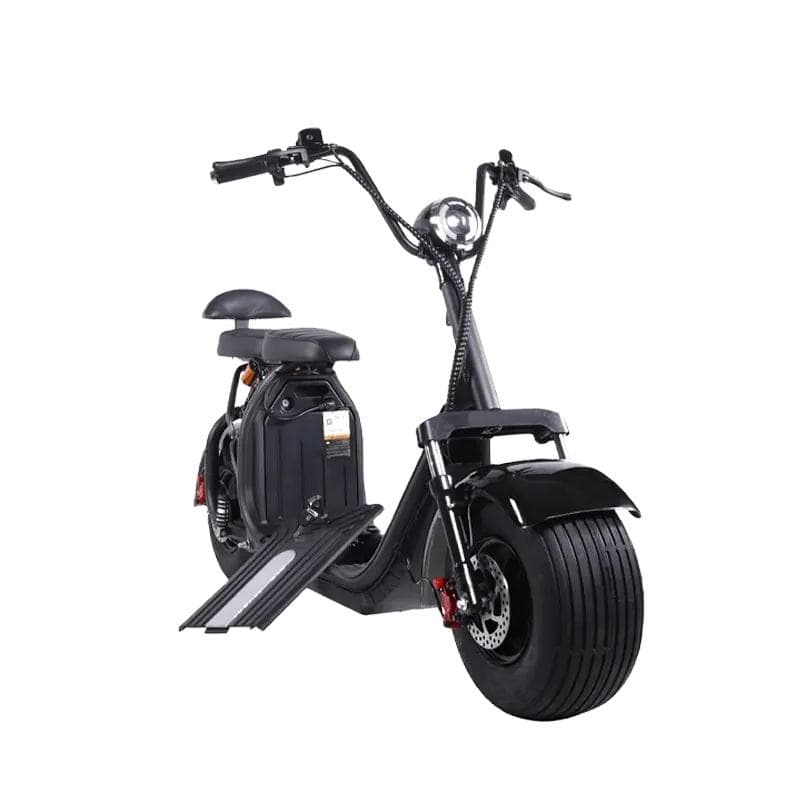
How to Import Electric Motorcycles from China to Nigeria: 2026 Complete Guide
Nigeria represents the single largest market opportunity for any electric motorcycle supplier targeting Africa. With a population exceeding 230 million, chronic fuel shortages that have pushed petrol prices to record highs, and an urbanization rate that adds millions of city dwellers each year, the conditions for electric vehicle adoption are not just favorable -- they are urgent. This guide walks B2B importers through every step of bringing electric motorcycles from China to Nigeria, from supplier selection to Apapa port clearance.
The Nigerian EV Opportunity in 2026
Nigeria's two-wheeler market is massive. An estimated 5-8 million motorcycles (locally called "okada") operate across the country, serving as the primary mode of short-distance transportation in virtually every city and town. Lagos alone banned okada from major roads in 2020, but motorcycles remain dominant in secondary cities like Kano, Ibadan, Port Harcourt, and Abuja's satellite towns.
The economics of switching to electric are now overwhelming. With petrol prices fluctuating between N800-N1,200 per liter in 2026, a typical okada rider spends N3,000-N5,000 per day on fuel. An equivalent electric motorcycle costs N200-N400 per day to charge using grid electricity, and even less with solar charging. That is an 85-95% reduction in daily energy costs.
Beyond motorcycles, the electric keke napep (three-wheeled passenger taxi) market is equally compelling. Nigeria has an estimated 1.5 million keke napep in operation, and several state governments have announced incentives for electric alternatives. Read our cargo vs passenger tricycle comparison to understand which models fit the Nigerian market.
Nigeria Import Regulations for Electric Vehicles
Understanding the regulatory landscape is essential before placing your first order.
Standards Organization of Nigeria (SON)
SON regulates product quality standards for imported goods. Electric vehicles and their components must meet applicable Nigerian Industrial Standards. While there is no specific electric motorcycle standard as of early 2026, SON applies general safety and quality requirements. Key documents you will need:
- Product Certificate (SONCAP): Obtained through a SON-approved conformity assessment body (CAB). This involves product testing and factory inspection.
- Certificate of Conformity (CoC): Issued by the CAB after successful assessment.
- Test Reports: CE or other international certification is accepted as supporting evidence.
National Automotive Design and Development Council (NADDC)
The NADDC oversees automotive policy in Nigeria and has actively promoted EV adoption through several policy initiatives:
- Reduced import duties on electric vehicles (currently 10-15% vs 35% for ICE vehicles)
- Tax incentives for EV assembly plants
- Draft framework for EV charging infrastructure
The NADDC has signaled that it will introduce a formal type-approval process for electric vehicles. Importers who establish relationships and begin imports now will be well-positioned when formal standards are published.
Customs and Duty
Electric motorcycles are classified under HS Code 8711.60 (electric motorcycles and cycles). Current applicable charges include:
- Import Duty: 10-15% CIF value (reduced rate for EVs)
- VAT: 7.5%
- CISS (Comprehensive Import Supervision Scheme): 1% FOB
- Surcharge and levies: Approximately 2-4% combined
- Total estimated duty and taxes: 22-30% of CIF value
Note: Duty rates are subject to change. Always verify current rates with a licensed customs broker before finalizing your cost calculations.
Shipping from China to Lagos (Apapa Port)
Route and Transit Time
The standard shipping route from major Chinese ports (Shanghai, Ningbo, Guangzhou) to Lagos Apapa Port takes approximately 38-45 days, with 42 days being the typical average. Some routes transit through Singapore or Port Klang for transshipment; direct services are faster but less frequent and more expensive.
Shipping Costs
For a full 40HQ container of electric motorcycles (30-40 units CBU or 40-55 units SKD):
| Cost Component | Per Container | Per Unit (36 units) |
|---|---|---|
| Ocean Freight | $3,200 - $4,500 | $89 - $125 |
| Terminal Handling (China) | $150 - $250 | $4 - $7 |
| Terminal Handling (Lagos) | $300 - $500 | $8 - $14 |
| Documentation | $100 - $150 | $3 - $4 |
| Total Base Freight | $3,750 - $5,400 | ~$120/unit |
These figures represent base freight only. Additional costs include customs brokerage, port storage (critical at Apapa, where delays are common), inland transport, and the duties outlined above.
Apapa Port Realities
Lagos Apapa Port is Nigeria's busiest port and is known for congestion. Practical tips for importers:
- Use a clearing agent with Apapa experience. Port procedures, informal processes, and the physical logistics of container retrieval require local knowledge.
- Budget for 7-14 days of port storage. Clearance rarely happens within the free storage period.
- Consider Tin Can Island Port as an alternative. It handles the same container types and may offer faster clearance during peak congestion at Apapa.
- Pre-clear documents. Submit SONCAP, Bill of Lading, commercial invoice, packing list, and Form M (Central Bank of Nigeria requirement) well before the vessel arrives.
Payment and Supplier Terms
Standard payment for Chinese electric motorcycle manufacturers follows this structure:
- 30% Deposit via TT (Telegraphic Transfer / bank wire) upon order confirmation
- 70% Balance via TT before shipment, against presentation of loading photos and Bill of Lading copy
For first-time orders, some manufacturers may require 50% deposit. As your relationship develops, terms typically improve. Letters of credit (L/C) are available for orders exceeding $50,000 but add banking fees and complexity.
Important: Always pay to the company's verified bank account, not to personal accounts. Request the manufacturer's business license and bank account verification letter. EV GroupBuy handles payment verification as part of our group buying process, adding a layer of security for importers.
Reducing Costs Through Group Buying
The biggest cost challenge for Nigerian importers is not the product price -- it is the logistics overhead. Shipping a container with only 10 units means paying the same ocean freight, terminal handling, and clearance costs as someone shipping 36 units. Your per-unit landed cost skyrockets.
This is exactly the problem EV GroupBuy's container sharing model solves. Here is how it works for the Nigeria market:
- Select Lagos (Apapa) as your port on our platform
- Choose your products from our verified catalog -- motorcycles, tricycles, batteries, or spare parts
- Join an open batch with other importers shipping to Lagos
- Share container costs -- freight, handling, and documentation are divided across all units in the container
- Each importer receives their own goods with individual documentation upon arrival
The result: you import 5 or 10 units at the per-unit freight cost that previously required ordering 36. For a typical electric motorcycle, this reduces your landed cost by $150-$250 per unit compared to solo importing.
Building Your Business in Nigeria
Successful EV importers in Nigeria follow a proven sequence:
- Start small: Import 5-10 units through a group buy. Test the market, understand the clearance process, and identify your customer base.
- Establish service capability: Partner with a local mechanic or set up a small workshop. Electric motorcycles are simpler to maintain than petrol ones, but customers need confidence that service is available.
- Stock spare parts: Import tires, brake pads, controllers, and at least one spare battery pack with your first vehicle order. Parts availability builds trust.
- Build financing options: Most Nigerian okada riders cannot pay $500-$800 upfront. Daily or weekly hire-purchase models, similar to those used for petrol okada, are essential for scaling.
- Scale with data: Track which models perform best, which customers pay on time, and which routes generate the most demand. Use this data to inform your second and third container orders.
Get Started Today
The Nigerian electric motorcycle market is in its early stages, which means the importers who establish themselves now will build the brands and distribution networks that dominate for years to come. Browse available models suited for the Nigerian market, or learn how group buying can get your first shipment to Lagos at a fraction of the usual cost.
EV GroupBuy has open batches shipping to Lagos regularly. Join one today and take the first step toward building Nigeria's electric mobility future.
Answer First
Frequently asked questions
Quick answers buyers usually need before they contact a factory or forwarder.
What is the main port for importing electric motorcycles into Nigeria?
Most importers route shipments through Lagos, especially Apapa Port, because it remains the main gateway for containerized vehicle imports and inland distribution.
What documents should Nigerian EV importers prepare before shipping?
At minimum, importers should line up supplier invoices, packing lists, bill of lading data, SONCAP or conformity paperwork, battery safety documents like UN38.3 and MSDS, and broker-confirmed duty estimates.
Is group buying useful for first-time EV importers in Nigeria?
Yes. Group buying lets first-time importers test demand with a smaller order size while still accessing factory pricing and lower per-unit freight on the China-to-Lagos route.
Related articles
More guides from the same topic cluster.
Market Entry Guides
Electric Tuk-Tuk Buying Guide 2026: Specs, Prices & Best Models for Importers
The electric tuk-tuk -- known regionally as an auto-rickshaw, bajaji, keke, or three-wheeler taxi -- is one of the fastest-selling electric vehicles in emerging markets. As fuel prices climb and cities push for cleaner a
Market Entry Guides
Electric Boda Boda Revolution: Importing E-Motorcycles from China to Kenya
The boda boda is the backbone of Kenyan transportation. With an estimated 1.4 million motorcycle taxis operating across the country -- from downtown Nairobi to rural villages in Western Kenya -- the opportunity to import
Market Entry Guides
Electric Delivery Scooters: The Most In-Demand EV for Last-Mile Logistics
Across Africa, Latin America, the Middle East, and South Asia, one category of electric vehicle outsells every other: the delivery scooter. Food delivery apps, courier companies, e-commerce fulfillment services, and smal