Electric Tuk-Tuk Buying Guide 2026: Specs, Prices & Best Models for Importers
The electric tuk-tuk -- known regionally as an auto-rickshaw, bajaji, keke, or three-wheeler taxi -- is one of the fastest-selling electric vehicles in emerging markets. As fuel prices climb and cities push for cleaner a
Last reviewed on May 30, 2026
Quick Take
The electric tuk-tuk -- known regionally as an auto-rickshaw, bajaji, keke, or three-wheeler taxi -- is one of the fastest-selling electric vehicles in emerging markets. As fuel prices climb and cities push for cleaner a
Electric Tuk-Tuk Buying Guide 2026: Specs, Prices & Best Models for Importers
The electric tuk-tuk -- known regionally as an auto-rickshaw, bajaji, keke, or three-wheeler taxi -- is one of the fastest-selling electric vehicles in emerging markets. As fuel prices climb and cities push for cleaner air, operators across Africa, Latin America, and South Asia are switching from petrol three-wheelers to electric models that cost 80-90% less to run. For importers and distributors, the electric tuk-tuk is a high-demand, high-margin product with a clear path to volume sales. This guide breaks down the specifications, battery options, passenger configurations, and wholesale pricing you need to source the right models.
Why Electric Tuk-Tuks Sell
A petrol auto-rickshaw burns $8-15 of fuel per day in typical taxi service. An electric equivalent costs $1-2 in electricity to cover the same distance. For a driver earning a daily wage, that difference is life-changing -- and it is why electric tuk-tuks pay for themselves within 8-14 months of daily operation. The result is a market growing 50%+ year over year, with the strongest demand in:
- East and West Africa (Kenya, Uganda, Nigeria, Ghana) for passenger taxi fleets
- South Asia (India, Bangladesh, Sri Lanka) where the rickshaw is already the dominant urban transport
- Latin America (Mexico, Colombia, Peru) for last-mile passenger and tourist transport
Because demand is driven by working operators, the buyers are price-sensitive but volume-hungry -- exactly the profile that suits container group-buying.
Electric Tuk-Tuk Types
Classic Closed-Cab Auto-Rickshaw
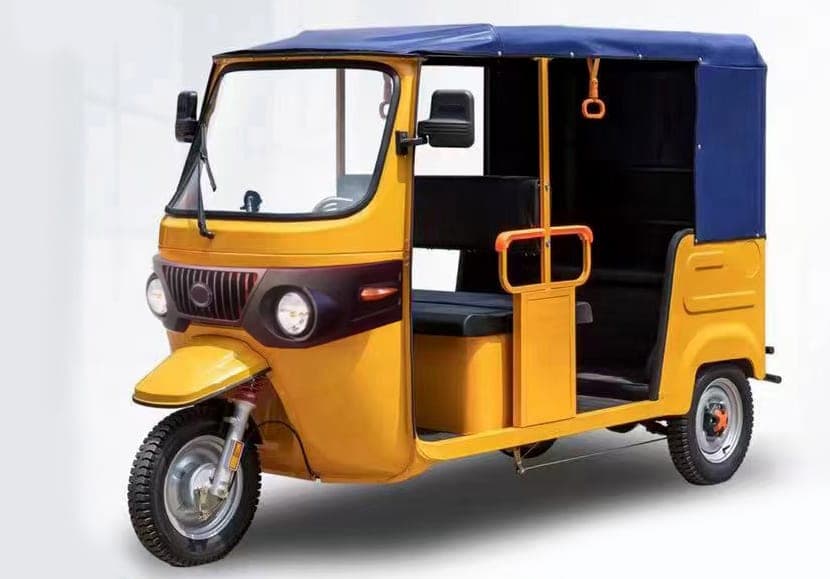
The iconic Bajaj-style tuk-tuk with a front driver cabin and a covered rear passenger bench. Seats a driver plus 3-4 passengers. This is the highest-volume passenger model and the most recognizable on the street. A complete unit ships with battery, charger, and full canopy.
Open Canopy Passenger Tricycle
A lighter, open-sided design with a roof canopy and bench seating. Boarding is faster and the vehicle is cheaper, making it popular for short market and shuttle routes. Our open passenger tricycle (Model 9-2) is a good example of this category.
Premium Three-Row Tuk-Tuk
A stretched platform with three bench rows that carries 1 driver + 8 passengers. These use a 4000W AC motor and a large lithium pack to move the extra load, and they suit high-capacity transit and shuttle operators who need more seats per trip.
Specifications That Matter
When comparing electric tuk-tuks, focus on these six specs:
| Spec | Entry Model | Premium Model | Why It Matters |
|---|---|---|---|
| Motor power | 2000W brushless | 4000W AC | Hill-climbing and full-load acceleration |
| Voltage | 72V | 72V | Higher voltage = better efficiency under load |
| Battery | Lead-acid | Lithium 7.2-14.4 kWh | Lithium lasts 4-5x longer and weighs less |
| Top speed | 40 km/h | 60 km/h | Route type and local speed limits |
| Range | 80-100 km | 100-200 km | Daily kilometers between charges |
| Seating | Driver + 4 | Driver + 8 | Revenue per trip |
Motor type is the biggest dividing line. A brushless DC motor at 2000W is fine for flat cities. For hilly terrain or heavier passenger loads, a 4000W AC motor delivers the torque and heat tolerance needed for all-day duty. AC motors also tend to need less maintenance over their life.
Battery chemistry decides total cost of ownership. Lead-acid packs are cheaper upfront but last roughly 300-500 cycles. Lithium iron phosphate (LFP) packs last 2,000+ cycles, weigh far less, and recharge faster -- see our LFP battery technology guide for the full comparison. Many operators start with lead-acid to lower the purchase price, then upgrade to lithium at first replacement.
Wholesale Pricing in 2026
Factory-direct electric tuk-tuk pricing (ex-works, complete unit with battery and charger):
| Model | Configuration | Approx. Wholesale |
|---|---|---|
| Open canopy passenger trike | 72V / 1500W, lead-acid | from $940 |
| Classic closed-cab tuk-tuk | 72V / 2000W, lead-acid | from $1,550 |
| Premium single-row tuk-tuk | 72V / 4000W AC, lithium | from $2,200 |
| Three-row 8-seat tuk-tuk | 72V / 4000W AC, lithium | from $2,600 |
These are ex-factory prices. Your landed cost adds freight, duties, and inland delivery -- which is exactly where group-buying helps. By joining a shared container batch with other buyers, you split the freight on a full 40HQ container and cut the per-unit shipping cost compared with buying a handful of units on your own.
Container Loading and CKD Packing
Electric tuk-tuks are large, so how they pack determines your freight cost. Suppliers offer two options:
- CKD (Completely Knocked Down): the vehicle ships partly disassembled, fitting ~40 units in a 40HQ container. Lowest freight per unit; requires light assembly on arrival.
- SKD (Semi Knocked Down): less disassembly, faster to assemble, but fewer units per container (often 21-40).
For most importers, CKD is the right choice -- the freight savings outweigh the modest assembly labor. Read our container loading guide for a full breakdown.
How to Choose the Right Model
- Map your route type. Flat city = 2000W lead-acid. Hills or long routes = 4000W AC lithium.
- Count the seats you can sell. More passengers per trip = faster payback, but a heavier, pricier vehicle.
- Confirm local compliance. Check homologation, lighting, and brake rules before ordering, and request CE/EEC certificates.
- Order CKD to cut freight, and join a group-buy batch to share the container.
- Verify the supplier. Use our manufacturer verification checklist before paying a deposit.
Start Sourcing
Electric tuk-tuks combine strong, fuel-driven demand with healthy margins and a clear payback story for the end operator -- a rare combination in the EV trade. Browse current passenger three-wheeler models and live container batches on our products page, or learn how shared-container group buying lowers your landed cost on every unit.
Answer First
Frequently asked questions
Quick answers buyers usually need before they contact a factory or forwarder.
How much does an electric tuk-tuk cost wholesale?
Factory-direct electric tuk-tuks start around $1,550 for a 2000W lead-acid passenger model and run to roughly $2,600 for a premium 4000W AC-motor, lithium, three-row model that seats up to eight passengers. Per-unit cost drops further when you join a shared container group-buy.
What is the difference between a 2000W and a 4000W electric tuk-tuk?
A 2000W tuk-tuk is ideal for flat city routes and short distances at up to 40 km/h. A 4000W AC-motor model reaches about 60 km/h, climbs hills under full load, and pairs with a larger lithium pack for a 100-200 km range, making it better for hilly terrain and longer passenger routes.
How many electric tuk-tuks fit in a 40HQ container?
Shipped CKD (completely knocked down), a 40HQ container holds about 40 tuk-tuks; SKD packing fits fewer (around 21-40 depending on model). CKD packing lowers per-unit freight, which is why group-buying full containers cuts landed cost dramatically.
Are electric tuk-tuks legal for passenger transport?
Regulations vary by country. Many markets in Africa, Latin America and South Asia allow electric three-wheelers for licensed passenger and taxi service. Confirm local homologation, lighting and brake requirements before importing, and request the certificates (CE, EEC where applicable) from your supplier.
Related articles
More guides from the same topic cluster.
Market Entry Guides
Electric Boda Boda Revolution: Importing E-Motorcycles from China to Kenya
The boda boda is the backbone of Kenyan transportation. With an estimated 1.4 million motorcycle taxis operating across the country -- from downtown Nairobi to rural villages in Western Kenya -- the opportunity to import
Market Entry Guides
Electric Delivery Scooters: The Most In-Demand EV for Last-Mile Logistics
Across Africa, Latin America, the Middle East, and South Asia, one category of electric vehicle outsells every other: the delivery scooter. Food delivery apps, courier companies, e-commerce fulfillment services, and smal
Market Entry Guides
How to Start an Electric Motorcycle Dealership in Africa: A Complete Business Plan
Africa is in the middle of a two-wheeled revolution. With over 27 million motorcycles already on the continent and fuel prices climbing year after year, the demand for affordable electric alternatives is accelerating fas