Latin America's Electric Mobility Revolution: Why Dealers Are Sourcing EVs from China
Latin America is undergoing a transportation transformation. From Mexico City to Bogota, from Lima to Sao Paulo, from Quito to Santiago, the same pattern is emerging: rising fuel costs, worsening urban congestion, tighte
Last reviewed on February 23, 2026
Quick Take
Latin America is undergoing a transportation transformation. From Mexico City to Bogota, from Lima to Sao Paulo, from Quito to Santiago, the same pattern is emerging: rising fuel costs, worsening urban congestion, tighte
Latin America's Electric Mobility Revolution: Why Dealers Are Sourcing EVs from China
Latin America is undergoing a transportation transformation. From Mexico City to Bogota, from Lima to Sao Paulo, from Quito to Santiago, the same pattern is emerging: rising fuel costs, worsening urban congestion, tightening emission regulations, and growing consumer demand for affordable electric alternatives. And the dealers, distributors, and entrepreneurs who are moving fastest to meet this demand are sourcing their inventory from a single country -- China.
This article examines why Chinese electric vehicles have become the default choice for Latin American importers, which product categories are selling fastest, how the major markets differ, and how group buying platforms make it viable for smaller dealers to compete with established distributors.
Market Overview: Where the Growth Is Happening
The Latin American EV market is not monolithic. Each country has its own dynamics, regulations, and demand patterns. Here are the five largest opportunities:
Mexico: The largest economy in Latin America for EV imports. Proximity to the United States creates spillover demand and awareness. Mexico City's pollution controls, Guadalajara's tech-forward population, and the massive delivery economy across all major cities create layered demand. Estimated addressable market for electric two-wheelers and three-wheelers: 200,000-400,000 units annually.
Colombia: Bogota has implemented aggressive policies favoring electric vehicles, including VAT exemptions on EVs, reduced import tariffs, and congestion charge exemptions. The city's hilly terrain demands higher-powered motors, but the flat areas of Medellin, Cali, and Barranquilla are ideal for standard electric scooters. Rappi, the delivery super-app born in Colombia, has created a massive rider base that increasingly demands electric vehicles.
Peru: Lima's congestion and pollution problems rival any city in the region. The Peruvian government has introduced tax benefits for electric vehicle imports, and Chinese brands have already established significant market share in the gasoline motorcycle segment, making the transition to electric a natural extension. Cargo tricycles for market vendors and small business logistics represent an underpenetrated category.
Brazil: The largest economy in Latin America but also the most complex for imports due to high tariffs, local content requirements, and the INMETRO certification system. Despite these barriers, the sheer market size -- 215 million people -- means even capturing a small percentage of the two-wheeler and three-wheeler market translates into significant volume. Sao Paulo, Rio de Janeiro, and Belo Horizonte are the primary demand centers.
Ecuador: A smaller but rapidly growing market where the elimination of fuel subsidies has sharply increased gasoline prices, creating immediate economic incentive for electric alternatives. Guayaquil and Quito represent the main demand centers, with delivery services and urban commuting driving adoption.
Why Chinese EVs: The 40-60% Price Advantage
The fundamental reason Latin American dealers are sourcing from China is price. Chinese manufacturers offer electric two-wheelers and three-wheelers at 40-60% lower prices than comparable products from European, Japanese, or American brands. This is not because of inferior quality -- it is because of manufacturing scale, supply chain integration, and competitive market dynamics.
Manufacturing scale: China produces over 50 million electric two-wheelers annually for its domestic market. This volume has created a mature supply chain where every component -- motors, controllers, batteries, frames, wiring harnesses -- benefits from massive economies of scale.
Vertical integration: Many Chinese EV manufacturers produce their own motors, controllers, and even battery packs in-house or through closely integrated supplier relationships. This eliminates the margin stacking that occurs when each component passes through multiple intermediaries.
Battery cost leadership: China controls over 75% of global lithium-ion battery cell production. This supply chain dominance translates directly into lower battery costs, and the battery represents 30-40% of an electric vehicle's total cost.
Competitive domestic market: With hundreds of electric two-wheeler manufacturers competing in the Chinese domestic market, prices are driven down to levels that leave thin margins for manufacturers but extraordinary value for export buyers.
Here is a representative price comparison:
| Vehicle Category | Chinese Factory (EXW) | European/Japanese Brand (Wholesale) | Savings |
|---|---|---|---|
| Electric scooter (1500W) | $480-$600 | $1,200-$1,800 | 55-67% |
| Electric motorcycle (3000W) | $720-$980 | $1,800-$3,200 | 55-69% |
| Cargo tricycle (1500W) | $680-$950 | $1,500-$2,500 | 55-62% |
| Delivery scooter (1500W) | $500-$580 | $1,100-$1,600 | 55-64% |
These savings allow Latin American dealers to offer retail prices that are accessible to a much broader consumer base while maintaining healthy margins.
Import Routes: Pacific and Atlantic Options
Latin America's geography creates two primary shipping corridors from China:
Pacific Route (West Coast)
- Shanghai/Ningbo to Callao (Peru): 22-26 days
- Shanghai/Ningbo to Buenaventura (Colombia): 24-28 days
- Shanghai/Ningbo to Manzanillo (Mexico): 22-26 days
- Shanghai/Ningbo to Guayaquil (Ecuador): 23-27 days
The Pacific route is generally shorter and cheaper for countries with Pacific ports. It avoids the Panama Canal transit fees that add to Atlantic-route costs.
Atlantic Route (East Coast)
- Shanghai/Ningbo to Veracruz (Mexico): 28-32 days
- Shanghai/Ningbo to Cartagena (Colombia): 30-35 days
- Shanghai/Ningbo to Santos (Brazil): 35-40 days
The Atlantic route serves Mexico's Gulf Coast market and Brazil. Transit times are longer due to the Panama Canal transit or the longer route around the Cape of Good Hope.
Freight cost per unit (at full container load):
| Port | 2W Freight/Unit | 3W Freight/Unit |
|---|---|---|
| Manzanillo, Mexico | $80 | $170 |
| Veracruz, Mexico | $85 | $180 |
| Callao, Peru | $78 | $165 |
| Buenaventura, Colombia | $82 | $175 |
| Guayaquil, Ecuador | $80 | $170 |
| Santos, Brazil | $95 | $200 |
These rates assume full container utilization. Partial containers through LCL shipping can cost 2-3 times more per unit. Learn how group buying eliminates this penalty.
Most Popular Product Categories in LATAM
Based on order volume through EV GroupBuy and broader market data, these are the product categories generating the most demand across Latin America:
1. Delivery Scooters
The undisputed volume leader. Every major Latin American city has a growing fleet of delivery riders, and the transition from gasoline to electric is accelerating. The 60V 1500W delivery scooter with 80 km range and 120 kg load capacity at $528 EXW is the single most-ordered product for the LATAM region.
2. Cargo Tricycles
Street vendors, market traders, small manufacturers, and agricultural suppliers across Latin America rely on three-wheeled cargo vehicles for goods transport. Electric cargo tricycles with 300-500 kg payload capacity are replacing gasoline and human-powered alternatives. Peru and Colombia show the strongest demand in this category.
3. Urban Commuter Motorcycles
The 72V 3000W electric motorcycle with 80 km/h top speed and 120 km range appeals to commuters who want a gasoline motorcycle equivalent without the fuel costs. Mexico and Colombia lead demand in this category.
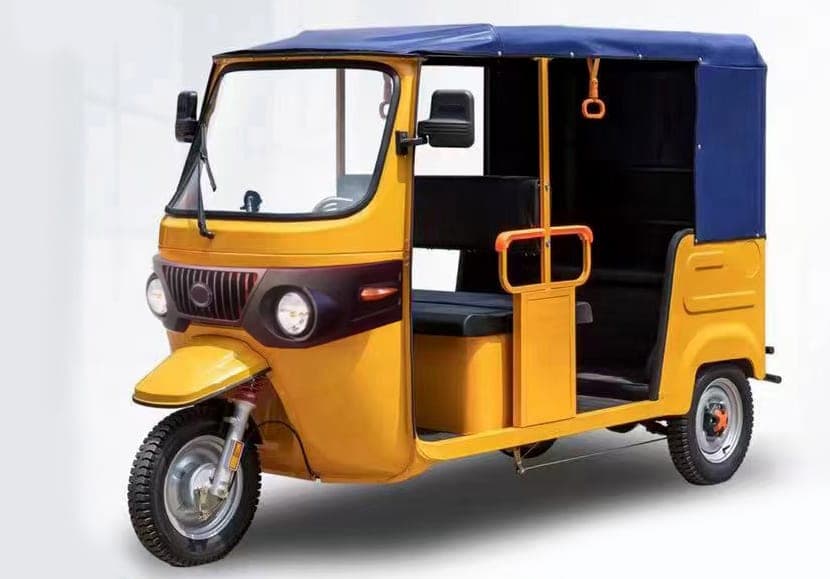
4. Passenger Tricycles
In secondary cities and tourist areas across Mexico, Peru, and Ecuador, electric passenger tricycles (mototaxis) provide affordable short-distance transport. These replace aging gasoline and diesel three-wheelers with quieter, cleaner alternatives.
Browse our full product catalog to see available models with specifications and pricing for each category.
Group Buying: Making Small Orders Viable
The traditional barrier for small and medium dealers in Latin America has been minimum order quantities. Chinese factories typically require 50-100 unit minimums for direct orders, and the economics of shipping a partial container make small orders prohibitively expensive.
EV GroupBuy's container sharing model solves this problem:
- No minimum order: Order as few as 2-3 units
- Shared container space: Your units ship alongside other buyers' orders to the same port
- Full-container freight rates: Everyone in the batch pays the per-unit rate of a full container
- Batch transparency: See how full the container is in real time and when it will ship
- Up to 33% freight savings: Compared to shipping partial containers through freight forwarders
This model is particularly valuable for dealers testing a new market, entrepreneurs launching their first EV business, or established dealers adding electric models to their existing gasoline motorcycle inventory without committing to full container volumes.
Regulatory Landscape by Country
Understanding the regulatory environment in each market helps you plan your import strategy:
Mexico: Relatively straightforward. NOM labeling compliance, standard customs procedures, 10-15% import duty on most EVs. Some states offer reduced vehicle taxes for electric vehicles.
Colombia: Among the most EV-friendly regulations in LATAM. 0% import tariff on electric vehicles (under certain classifications), 5% VAT (vs 19% for gasoline vehicles), and congestion charge exemptions in Bogota. RETIE certification required for electrical equipment.
Peru: Growing incentive framework. Reduced ISC (selective consumption tax) for electric vehicles. Standard customs procedures apply. SUNAT manages import clearance.
Brazil: The most complex import environment. INMETRO certification is mandatory and can take 6-12 months and cost $15,000-$30,000 for initial product registration. Import tariffs of 20-35% on finished vehicles. However, SKD/CKD imports for local assembly face lower tariffs, creating an opportunity for importers willing to establish assembly operations.
Ecuador: INEN standards compliance required. Import tariffs vary by vehicle classification. The removal of fuel subsidies has created strong policy interest in EV adoption, with potential new incentive programs in development.
Getting Started: Your Path to Market
Whether you are a motorcycle dealer in Bogota looking to add electric models, a logistics company in Lima building a delivery fleet, or an entrepreneur in Mexico City launching a new EV brand, the steps to import from China through EV GroupBuy are straightforward:
- Identify your market and category: Which product type fits your local demand? Delivery scooters, commuter motorcycles, cargo tricycles, or a mix?
- Select models with the right specifications: Browse our product catalog with detailed specs, certifications, and pricing.
- Choose your destination port: Pacific or Atlantic route, and calculate your landed cost including duties and taxes.
- Join an open container batch: See how group buying works and find batches currently accepting orders for your port.
- Arrange local logistics: Customs broker, warehouse, and distribution network.
Latin America's electric mobility revolution is not a future prospect. It is happening now, driven by economics, regulation, and consumer demand. The dealers who establish Chinese supply chains today will own the market as adoption accelerates.
Start your first group buy order and bring affordable electric mobility to your market.
Related articles
More guides from the same topic cluster.
Market Entry Guides
Electric Tuk-Tuk Buying Guide 2026: Specs, Prices & Best Models for Importers
The electric tuk-tuk -- known regionally as an auto-rickshaw, bajaji, keke, or three-wheeler taxi -- is one of the fastest-selling electric vehicles in emerging markets. As fuel prices climb and cities push for cleaner a
Market Entry Guides
Electric Boda Boda Revolution: Importing E-Motorcycles from China to Kenya
The boda boda is the backbone of Kenyan transportation. With an estimated 1.4 million motorcycle taxis operating across the country -- from downtown Nairobi to rural villages in Western Kenya -- the opportunity to import
Market Entry Guides
Electric Delivery Scooters: The Most In-Demand EV for Last-Mile Logistics
Across Africa, Latin America, the Middle East, and South Asia, one category of electric vehicle outsells every other: the delivery scooter. Food delivery apps, courier companies, e-commerce fulfillment services, and smal